On this page
A well has three failure points that feel identical from the kitchen: the pump, the pressure tank and the controls. The bill differs by a factor of ten, so an hour of narrowing it down is worth doing.
Key figures
- 30 and 50 psi Example: pressure-switch start and stop settings
- 40 and 60 Example: alternative pressure-switch settings, in psi
The parts, briefly
- The pump. Usually a submersible unit hanging deep in the well on a pipe and a cable. Shallow wells sometimes use a jet pump in the house instead.
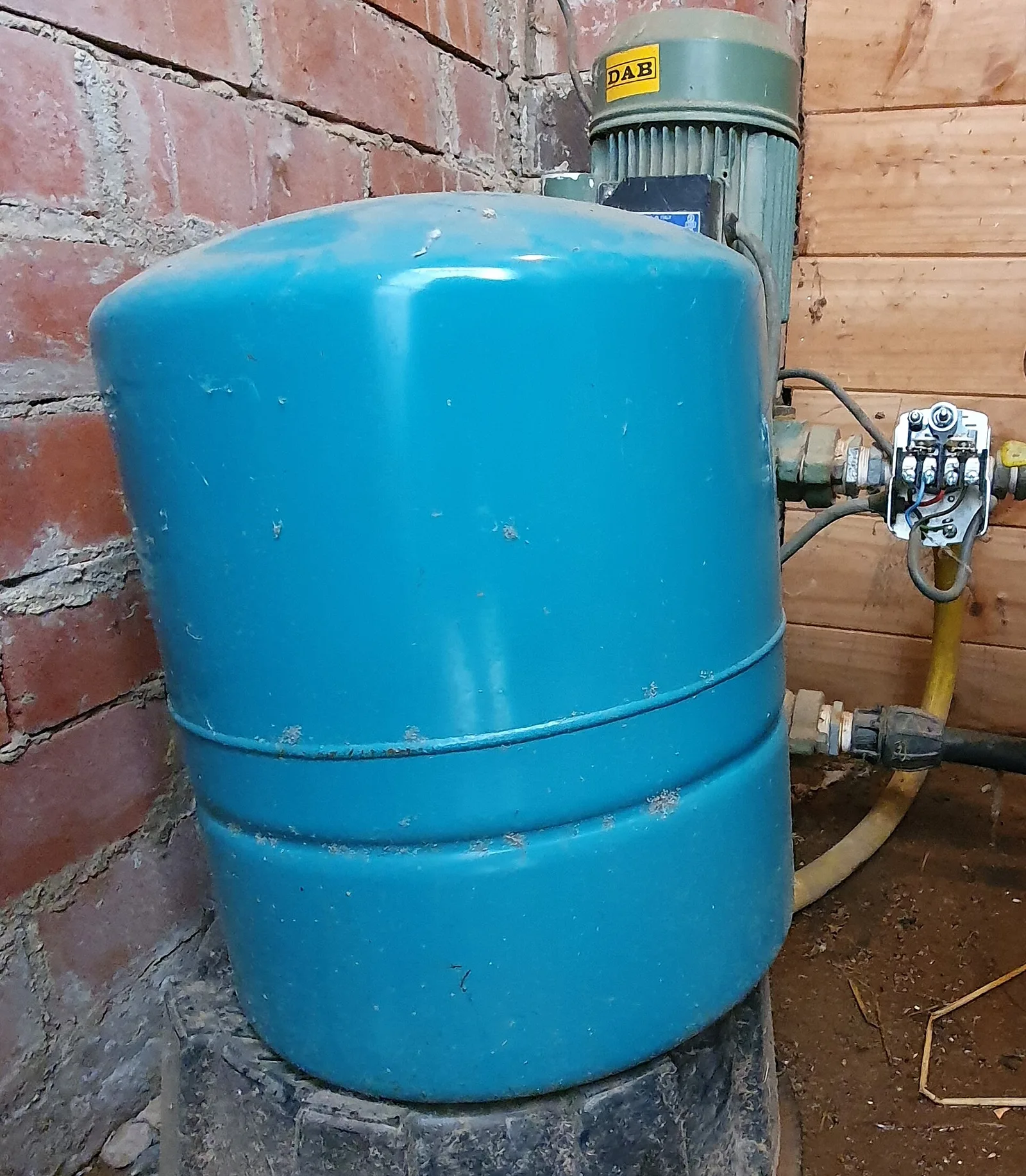
- The pressure tank. A tank with a bladder or air cushion that stores pressurised water so the pump is not started for every cup of tea.
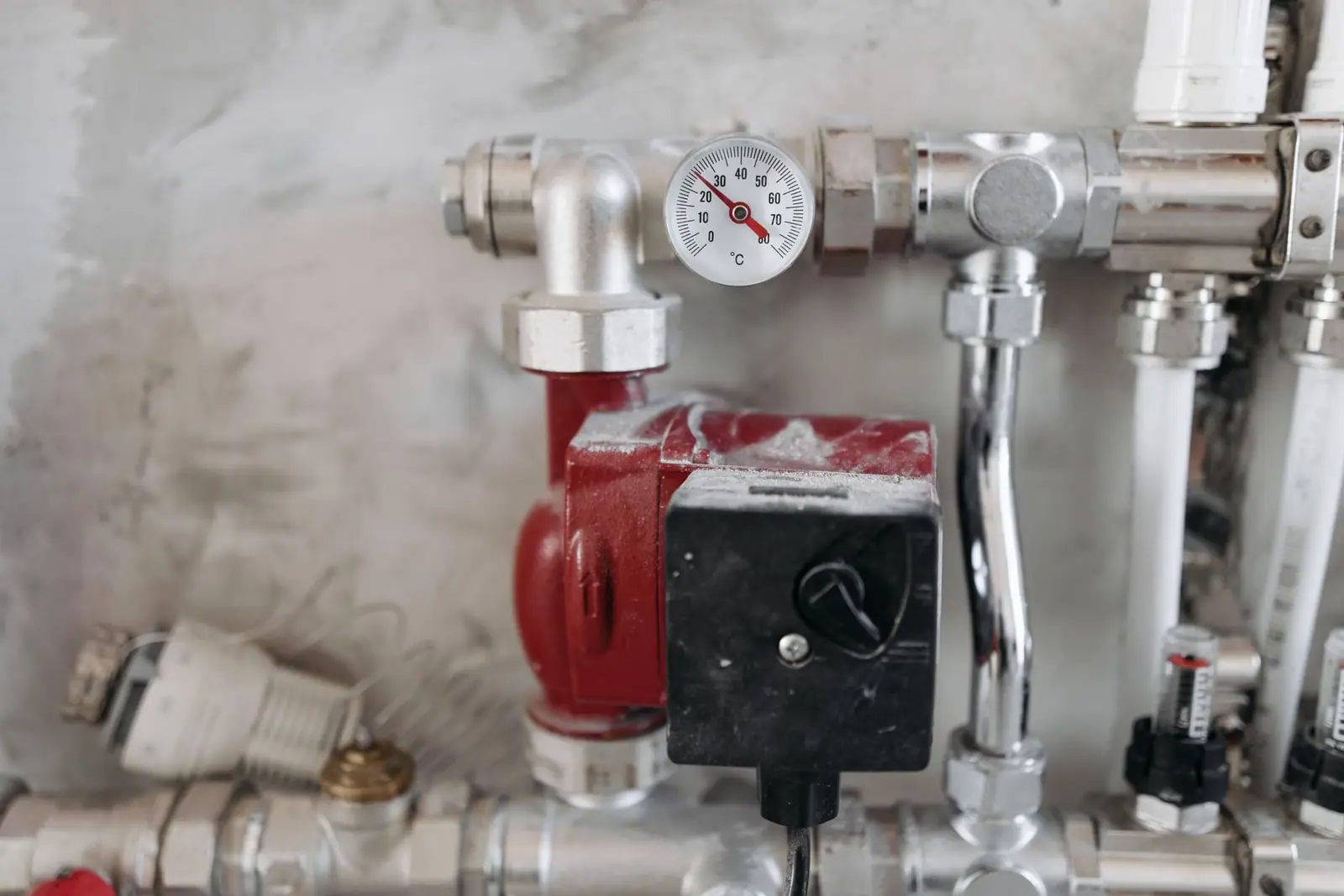
- The pressure switch. The small box that turns the pump on at a low pressure and off at a high one, commonly set at 30 and 50 psi, or 40 and 60.
- The check valve. Keeps water from draining back down the well when the pump stops.
- The well itself: casing, cap, water level and yield.
Read the symptom
No water at all. Check the breaker first, then the pressure switch. A tripped breaker, a burned switch contact or a failed capacitor on a jet pump are all common and all much cheaper than a pump. If the breaker trips again immediately, stop and call somebody: that can indicate a faulty pump or damaged cable.
The pump runs constantly and pressure never builds. Possibilities: a leak somewhere between the well and the house, a failed check valve letting water fall back, a worn pump that can no longer lift, or a well whose water level has dropped below the pump.
Rapid on-off cycling, a few seconds each way. This is the classic waterlogged pressure tank: the bladder has failed or the air charge has gone, so there is no cushion and the switch trips on and off. It is one of the cheapest fixes on this list and one of the most destructive if ignored, because the pump is being started constantly.
Spitting taps, air in the lines. Air is being drawn in: a low water level, a crack in the drop pipe, a failing check valve, or in some geology gas coming out of solution.
Sand or grit in the water. The pump may be set too low, the well screen may be failing, or the well may be drawing sediment. Grit destroys pumps, valves and appliances, so treat it as urgent rather than cosmetic.
Pressure fine at one tap, poor everywhere else. That is plumbing or a clogged treatment system inside the house, not the well.
What you can check yourself
- The breaker and the disconnect. Reset once. If it trips again, stop.
- The pressure gauge through a full cycle: note the cut-in and cut-out pressures and how long each side takes.
- The tank’s air charge, with the power off and the tank drained: the pressure at the valve on top should be a couple of psi below the cut-in setting. A tank that feels full of water everywhere when tapped has lost its bladder.
- Obvious leaks: the pressure tank fittings, the pitless adapter area, hose bibs, and any irrigation zone that might be stuck open.
- Whether anything else changed: a new appliance, a softener regenerating, a recent power cut, lightning, or work done nearby.
Do not let a pump run dry while you experiment. If the well has been drawn down, switching the pump off for several hours lets the water level recover, and it protects a pump that may be perfectly healthy. Running a submersible without water is one of the fastest ways to destroy one.
Getting a fair quote
- Ask what the diagnosis is before the pull. Pulling a submersible pump is labour and equipment; it should follow a reason.
- Ask what they will replace while it is out. If a pump is being pulled from several hundred feet, replacing the check valve, torque arrestor, wire and pitless components at the same time is usually sensible and much cheaper than a second visit.
- Ask for the old pump’s details: make, horsepower, setting depth and the reason it failed.
- Ask about the well’s water level and yield while the pump is out, because that measurement is free at that moment and expensive later.
- Get the new equipment recorded: model, horsepower, setting depth, wire size, date.
Keep the paperwork
A well file is worth real money at sale and at every service call: the well log from drilling with depth and casing details, the pump installation records, water test results, and the dates of every repair. If your state keeps well logs, ask for yours: many are public records and give the original depth and yield.
Related reading: A Well Pressure Tank Quote Starts With Diagnosis and Arsenic Comes From the Rock, Not the Farm.
Questions people ask
Why does my well pump turn on and off rapidly?
Almost always a waterlogged pressure tank: the bladder has failed or the air charge is gone, so there is no cushion and the pressure switch cycles. It is a cheap fix, and leaving it damages the pump through constant starting.
How do I know if it is the pump or the pressure switch?
Start at the breaker and the switch, which fail more often than pumps. Watch the pressure gauge through a full cycle and note the cut-in and cut-out points. No pressure with a silent pump points at power or the switch; a pump running constantly without building pressure points at a leak, the check valve, the pump or the water level.
What does air in the water lines mean on a well?
Air is being drawn in somewhere: a low water level in the well, a crack in the drop pipe, a failing check valve, or in some areas gas coming out of solution. Spitting taps are worth diagnosing promptly because a pump drawing air can be damaged.
Should I replace other parts when the pump is pulled?
Usually yes. Most of the cost of a deep submersible job is getting the pump out and back in, so replacing the check valve, wire, torque arrestor and worn pitless components at the same time is cheaper than a second visit later.
Where these figures come from
- Learn about Private Water Wells US Environmental Protection Agency · epa.gov
- Protect Your Home's Water US Environmental Protection Agency · epa.gov
- Domestic (Private) Supply Wells US Geological Survey · usgs.gov
Figures last checked September 2026.