On this page
Two things are true at the same time about PFAS and private wells, and the headlines usually carry only one of them.
The first is that the United States now has federal drinking water limits for these compounds. EPA’s national primary drinking water regulations list PFOA and PFOS at 0.0000040 mg/L each, which is four parts per trillion.
The second is that those limits, like every other drinking water standard, apply to public water systems. A private well is outside the Safe Drinking Water Act. Nobody is sampling it, nobody is required to notify you, and no compliance deadline applies to your kitchen tap.
Key figures
- 0.0000040 mg/L EPA PFOA public-water limit, in mg/L
- four parts per trillion EPA PFOS public-water limit
What changed in 2026
In May 2026 EPA proposed to rescind its regulatory determinations for four PFAS: perfluorohexane sulfonic acid (PFHxS), perfluorononanoic acid (PFNA), HFPO-DA (GenX), and mixtures of those three plus PFBS, along with the associated provisions in the 2024 PFAS rules. It separately proposed extending the compliance timeline for PFOA and PFOS for public systems.
For a well owner, the practical effect of all of that is nil, and that is the point worth taking away. The regulatory argument is about what utilities must measure and remove. Your well was never in it.
Whether you should test at all
PFAS testing is expensive compared with a routine well panel, so it is worth being deliberate rather than anxious. The case for testing is strongest when you are near a known or likely source:
- A fire training area or airport where firefighting foam was used.
- A military installation with a firefighting history.
- Industrial sites that manufactured or used fluorochemicals, including some textile, paper and metal plating operations.
- Landfills and sites where sewage sludge or biosolids were land-applied.
- An area where your state has already found PFAS in groundwater or in a nearby public supply.
Start with your state environmental agency or county health department. Many states have mapped known PFAS detections, some run sampling programmes for private wells near a source, and a few pay for treatment where contamination is linked to a responsible party. That call is free, and it can save several hundred dollars in sampling.
If you do test
- Use a laboratory accredited for PFAS analysis, and follow their sampling instructions exactly. These tests measure parts per trillion, and contamination from clothing, containers and even some personal care products during sampling is a genuine risk.
- Ask which compounds the panel covers, because panels differ and the regulatory list is only part of the family.
- Sample before any treatment, so you know the raw water.
- Keep the report. If a source is later identified in your area, the date of your result matters.
Treatment, if a result comes back
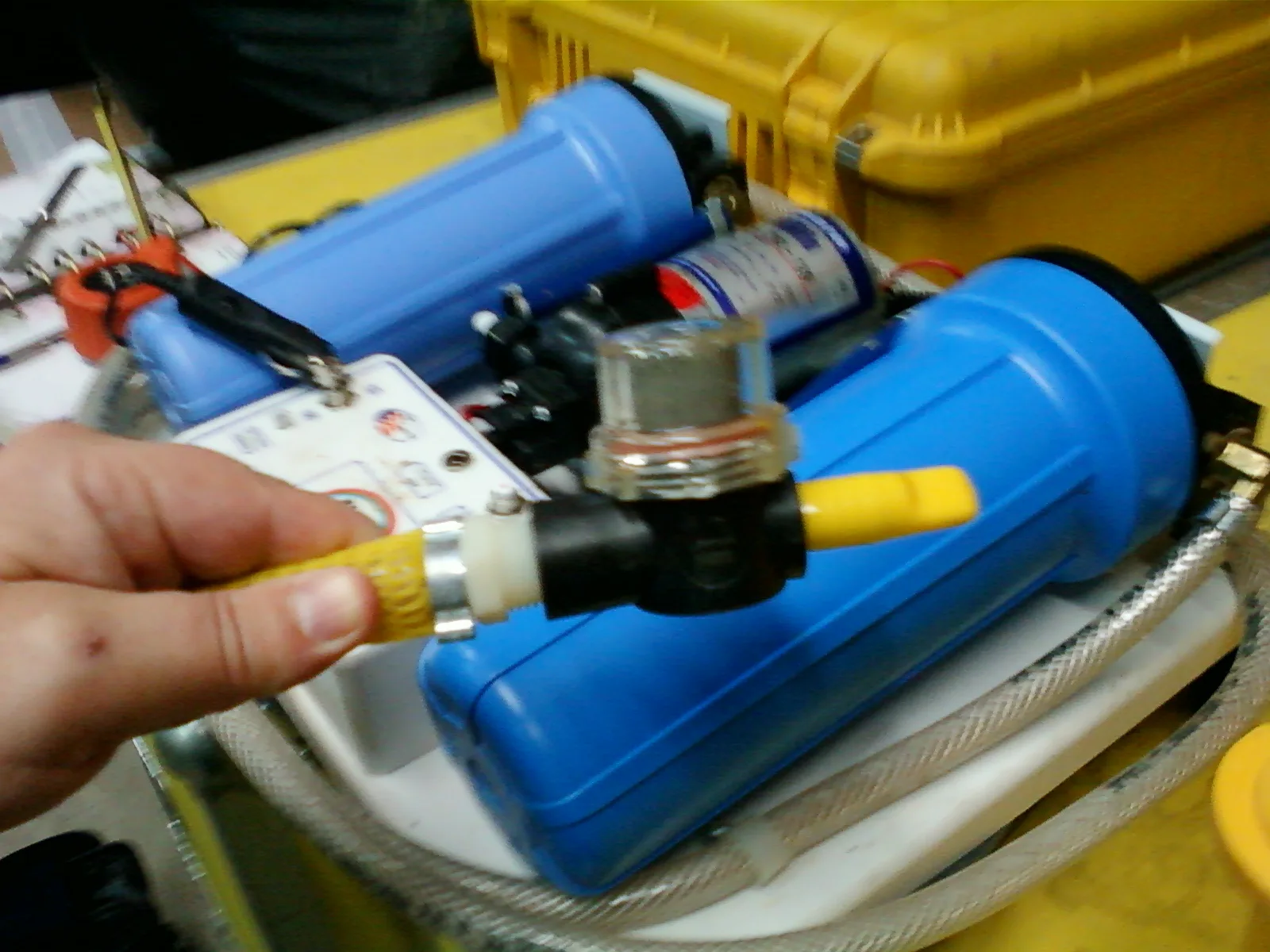
The two technologies with the most support for household PFAS reduction are:
- Granular activated carbon, usually a point-of-entry system, sized and replaced on a schedule.
- Reverse osmosis, usually a point-of-use system at the kitchen sink.
Ion exchange resins designed for PFAS also exist. In all cases, look for equipment certified to the relevant NSF/ANSI standard for PFOA and PFOS reduction, follow the media or membrane replacement schedule, and retest after installation to confirm the system is doing what it claims. Spent media that is never replaced quietly stops working, and there is nothing in the water’s appearance to warn you.
Boiling does not remove PFAS and, as with nitrate and arsenic, concentrates it. Ordinary jug filters and fridge filters are not designed for it either unless they are specifically certified. If you decide to treat, treat with equipment chosen for this job and verify it with a test.
Keeping this in proportion
A private well has several risks worth money and attention, and they are not equally likely. Bacteria and nitrate are common, cheap to test for and consequential now. Arsenic, radon and uranium are geological, locally common, and matter over years. PFAS is worth testing when you have a reason to think it is there.
The annual panel EPA recommends, total coliform, nitrate, total dissolved solids and pH, is still the thing to do every year. PFAS is a question to ask your health department, and then to answer with a specialist test if the answer points that way.
Related reading: Nitrate Is the Result Not to Wait On and A Well UV Quote Must Match the Water Problem.
Questions people ask
Do the EPA PFAS limits apply to private wells?
No. The 4 parts per trillion limits for PFOA and PFOS are national primary drinking water regulations, which bind public water systems. Private wells sit outside the Safe Drinking Water Act, so no limit is enforced at your tap and no one is required to sample it.
Did EPA remove some PFAS drinking water limits?
In May 2026 EPA proposed to rescind the regulatory determinations and associated provisions for PFHxS, PFNA, GenX and a mixture including PFBS, and separately proposed extending the compliance timeline for PFOA and PFOS. Those are proposals affecting public systems.
Should I test my well for PFAS?
Test if you have a reason: firefighting foam use, a military site, relevant industry, a landfill, land-applied biosolids, or known detections nearby. Start by asking your state environmental agency or health department, because many map known contamination and some sample private wells for free.
What removes PFAS from well water?
Granular activated carbon and reverse osmosis are the usual household options, with some ion exchange resins designed for it. Choose equipment certified to the NSF/ANSI standard for PFOA and PFOS reduction, keep to the replacement schedule, and retest after installation.
Where these figures come from
- National Primary Drinking Water Regulations US Environmental Protection Agency · epa.gov
- Rescission of Regulatory Determinations and Removal of Related Provisions for Four PFAS Substances Federal Register, 20 May 2026 · govinfo.gov
- Proposed PFAS Rescission Rule US Environmental Protection Agency · epa.gov
- Domestic (Private) Supply Wells US Geological Survey · usgs.gov
Figures last checked September 2026.