On this page
Hard water is the complaint that brings most well owners to a water treatment shop: scale on the kettle, spots on the glasses, soap that will not lather, and a water heater that sounds like it is boiling gravel. It is a real cost, and it is also the area with the most enthusiastic selling, so it pays to know the numbers before the visit.
Key figures
- 180 mg/L USGS very-hard classification begins above this level
- 60 mg/L USGS soft water upper limit
- 120 USGS moderately hard water upper limit, mg/L
What the numbers mean
USGS gives the classification used across the industry, measured as calcium carbonate:
| Hardness | Classification |
|---|---|
| 0 to 60 mg/L | Soft |
| 61 to 120 mg/L | Moderately hard |
| 121 to 180 mg/L | Hard |
| More than 180 mg/L | Very hard |
Some reports use grains per gallon instead. One grain per gallon is about 17.1 mg/L, so 180 mg/L is roughly 10.5 grains.
Notice what is missing from this: a health limit. Hardness is not on the list of contaminants EPA regulates for health. It is minerals, mostly calcium and magnesium, and the reason to treat it is scale, soap use and appliance life rather than safety.
What hardness actually costs
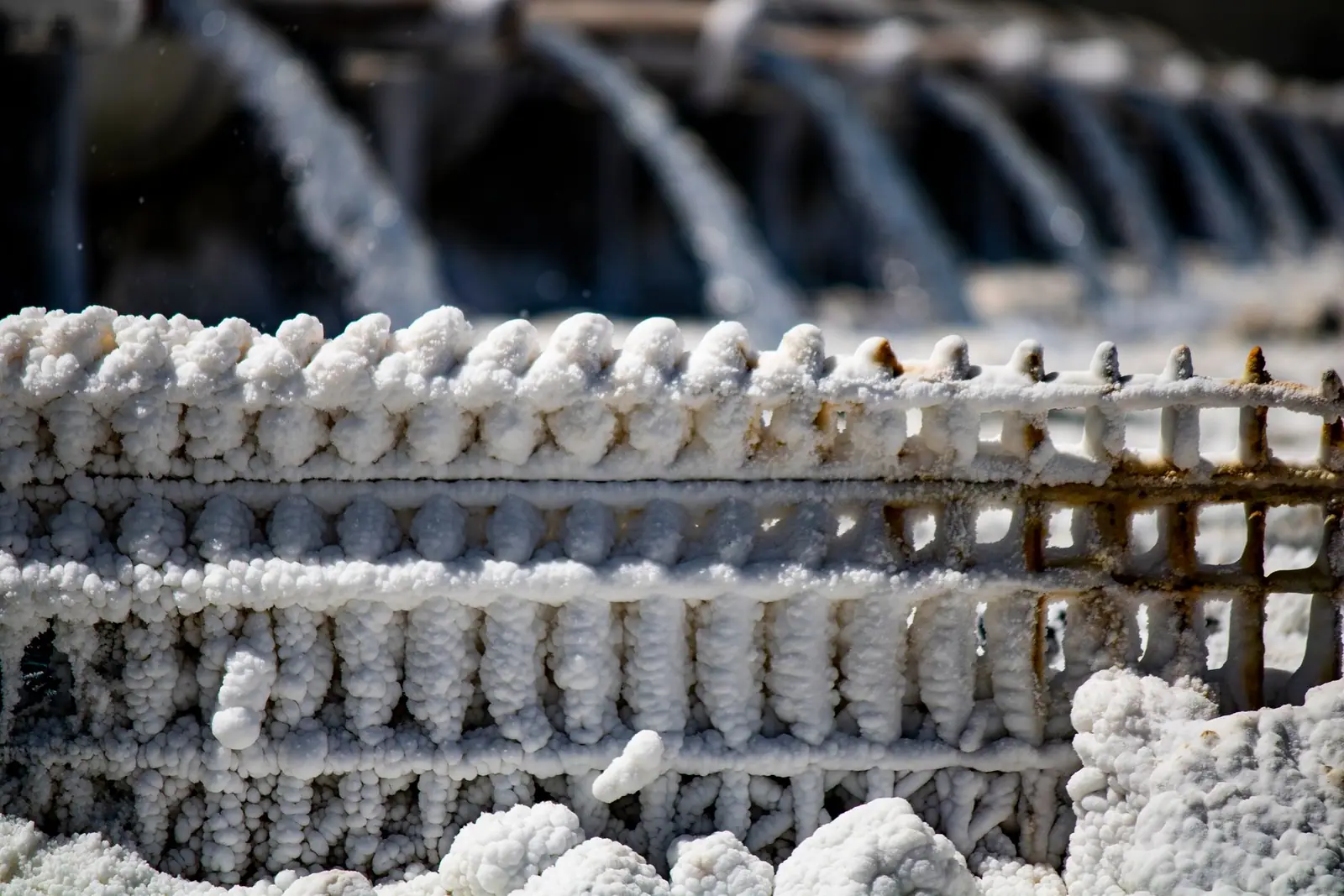
- Water heaters. Scale settles in the bottom of a tank and insulates the element or burner from the water, which wastes energy and shortens the heater’s life.
- Fixtures and appliances. Valves, aerators, dishwashers and washing machines all accumulate scale.
- Soap and detergent. Hard water consumes more of both to achieve the same result.
- Laundry and skin. The grey film on fabric and the film after a shower are hardness, not dirt.
None of that is dramatic in a single month, and all of it compounds over a decade, which is why the honest case for a softener is economic rather than medical.
Before you buy: test
Three numbers decide the equipment, and a supplier who does not ask for them is guessing.
- Hardness, in mg/L or grains per gallon.
- Iron, and whether it is dissolved (clear water that stains later) or already oxidised (orange water). Iron fouls softener resin, so above a few mg/L you generally need iron removal ahead of the softener rather than expecting the softener to cope.
- Manganese, which causes black staining and is treated alongside iron.
Also worth having: pH, total dissolved solids, and a bacteria result, because iron bacteria produce slime and odours that no softener addresses.
Sizing, briefly
A softener is sized on the grains of hardness the household removes between regenerations, which is your hardness multiplied by your daily water use. That is why the two questions that matter are “how hard is it” and “how many people live here”, not “how big is the house”.
Ask a supplier for:
- The grain capacity proposed and the calculation behind it.
- Whether it is metered or timed. Metered units regenerate based on water used and waste far less salt and water.
- The salt consumption per regeneration, and the expected frequency.
- The water used per regeneration, which is the part that matters if you are on a septic system.
Bypass the softener for the outside taps and for the kitchen cold tap if you can. Plants do not need softened water, and neither do drinking glasses. It also keeps the sodium added by the softening process out of the water you drink, which matters to anybody on a sodium-restricted diet. Potassium chloride is an alternative to salt for those households, at a higher running cost.
The septic question
Softener regeneration sends a slug of salty backwash to a drain. Whether that may go into a septic system is a local rule, and it genuinely varies: some jurisdictions allow it, some require it to be discharged elsewhere, and some set conditions.
Two reasons to ask before plumbing it in:
- Volume. A regeneration cycle can add a significant amount of water to a system in a short time, which matters most on a small or marginal drainfield.
- Chemistry. The brine is concentrated, and the arguments about its effect on soil and on the tank’s biology are exactly why jurisdictions differ.
Call the county health department, ask what is allowed for a new installation, and get the answer before the installer arrives rather than after.
The cheap alternatives worth knowing
- Flushing the water heater annually removes accumulated scale and is free.
- A point-of-use filter for drinking water does nothing for scale but solves taste complaints that people blame on hardness.
- Scale inhibitors and template-assisted crystallisation systems do not remove hardness; they aim to stop it depositing. They use no salt and produce no backwash, which is attractive on a septic system, and their performance claims are worth checking against independent certification rather than the brochure.
Related reading: Arsenic Comes From the Rock, Not the Farm and Nobody Tests Your Well Water Except You.
Questions people ask
What counts as hard water?
USGS classifies water as soft up to 60 mg/L as calcium carbonate, moderately hard to 120, hard to 180 and very hard above 180. In grains per gallon, divide by about 17.1, so very hard starts around 10.5 grains.
Is hard water bad for your health?
It is a nuisance rather than a health limit. Hardness is calcium and magnesium, and EPA does not set a health-based drinking water standard for it. The case for treating it is scale, soap use and the life of water heaters and appliances.
Can softener backwash go into a septic system?
That depends on your jurisdiction. Some allow the discharge to a septic system, some require it to go elsewhere, and some set conditions. Ask your county health department before installing, and bear in mind the volume of water each regeneration adds.
Do I need iron removal as well as a softener?
Often, yes. Iron fouls softener resin, so above a few milligrams per litre it is usually treated ahead of the softener with dedicated equipment. Test for iron and manganese, and for iron bacteria if you have slime or odour, before choosing anything.
Where these figures come from
- Hardness of Water US Geological Survey · usgs.gov
- National Primary Drinking Water Regulations US Environmental Protection Agency · epa.gov
- How to Care for Your Septic System US Environmental Protection Agency · epa.gov
Figures last checked September 2026.