On this page
The instinct when buying a stove is to get one with a bit extra in reserve, for the coldest week of the year. It is the wrong instinct, and it is the reason a lot of households end up with smoky glass, a chimney that needs sweeping twice a season and a sitting room nobody can stay in.
Why too big goes wrong
A stove is designed to burn hot. When it is too large for the space, it overheats the room within an hour, so the only way to live with it is to close the air control down and let the fire smoulder.
That has three consequences:
- Creosote. Smouldering means unburned gases condensing in a cooler flue. That is exactly how creosote builds, and creosote is what chimney fires burn.
- Wasted wood. Smoke is unburned fuel going up the chimney. A stove damped down is converting wood into smoke rather than heat.
- Smoke complaints, from inside the house and from the neighbours. A certified stove burning badly can smoke like an uncertified one.
An undersized stove has a much less serious failure mode: on the coldest nights you feed it more often, and you may need another heat source in a distant room.
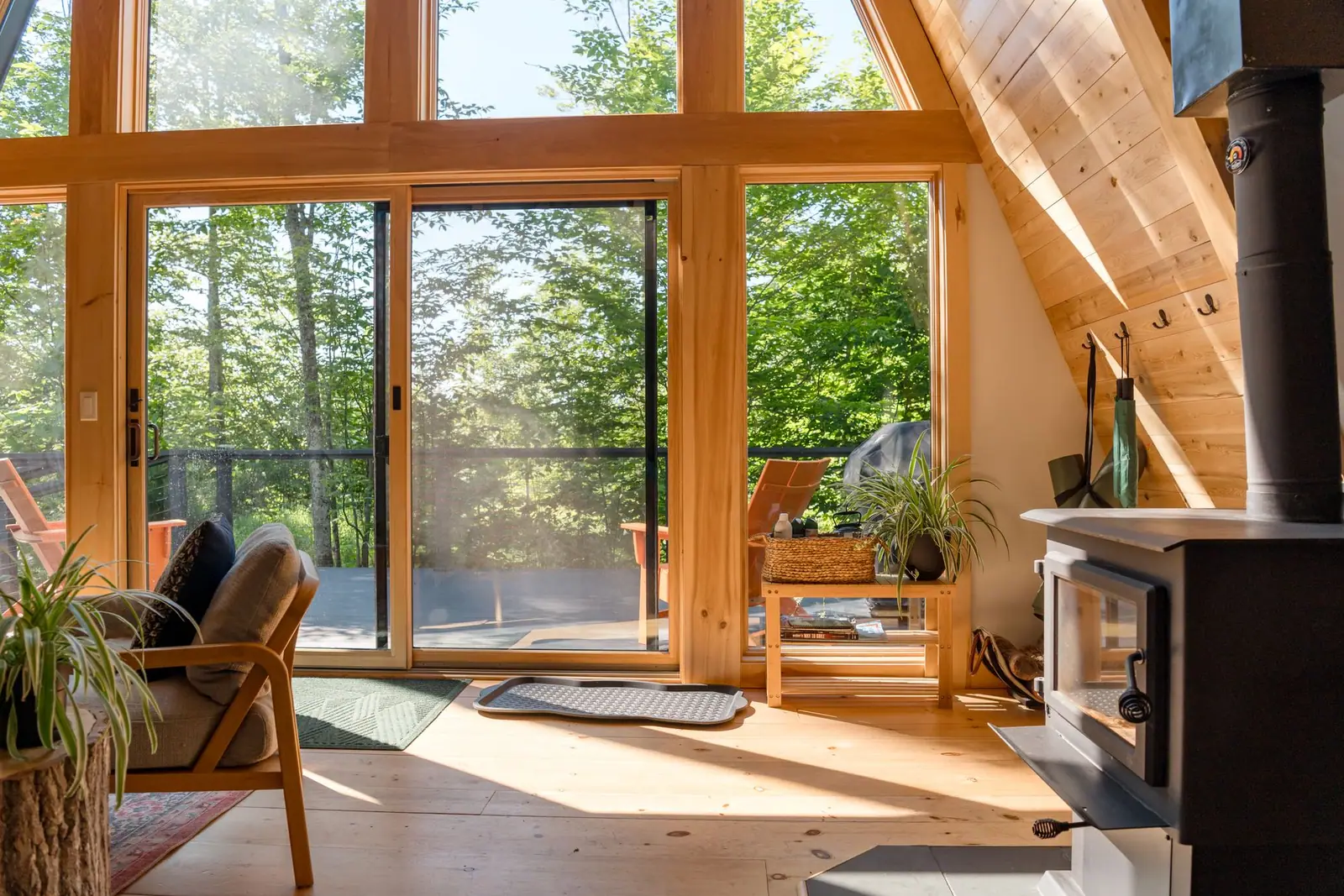
How EPA frames the choice
EPA’s own guidance avoids square-foot tables, and it is a better starting point than the numbers on a showroom card:
- Small stoves suit heating a family room or a seasonal cottage.
- Medium stoves suit small houses and medium-sized energy-efficient houses.
- Large stoves suit larger, open-plan houses or older, leakier houses.
Notice what does the work in those descriptions: not just size, but how tight the building is and how open the plan is.
The five questions that actually size a stove
- What is the stove heating? One room, most of a floor, or the whole house. Be honest: a stove in a corner heats that corner best.
- How does air move? Open stairs and doorways carry heat; closed hallways and bedrooms at the end of a corridor do not.
- How tight is the house? A well-insulated recent build needs far less output than a draughty farmhouse of the same floor area.
- What is the climate, and what is the job? Sole heat source through a northern winter is a different specification from taking the chill off in the evenings.
- How often will somebody load it? A firebox that holds a long burn matters for overnight heat, and firebox volume is a more honest comparison than maximum BTU.
Reading the numbers without being misled
- Maximum BTU per hour is achieved in a test with a full load and the air wide open. You will rarely run there.
- Heating area in square feet, where quoted, assumes an unstated insulation level and climate. Treat it as marketing rather than engineering.
- Firebox volume in cubic feet tells you how much wood you can load and therefore how long a burn lasts. It is the number most worth comparing.
- Log length decides whether ordinary cut firewood fits. A stove that needs short splits changes how you buy and process wood forever.
The stove and the chimney have to match. A stove’s listed flue size is part of the specification, and connecting a small stove to a large old fireplace flue gives a slow, cool draught that encourages exactly the smouldering you are trying to avoid. If a liner is needed, that is part of the sizing decision, not an extra.
Practical ways to get it right
- Ask the installer what they would fit in their own house of this size and age, and why.
- Ask to see a model burning, or at least ask how small a fire it can hold without smoking.
- Compare firebox volumes across your shortlist, not maximum outputs.
- Plan for the shoulder seasons. Most of the burning season is not the coldest week; it is October and March, when a big stove is at its worst.
- Consider two smaller heat sources rather than one giant one if the house is long or divided.
- If between two sizes, take the smaller, and keep the room comfortable by burning it properly rather than by starving it of air.
Related reading: Price Stove Glass as a Compatible Installed Repair and Catalytic or Not: the Honest Comparison.
Questions people ask
What size wood stove do I need for my house?
Size it by what it actually heats, how open the plan is and how tight the house is, not by total square footage. EPA's tiers are a good starting point: small stoves for a family room or cottage, medium for small or energy-efficient houses, large for open-plan or older, leakier ones.
What happens if a wood stove is too big?
You end up running it with the air closed down to avoid overheating the room. That smouldering fire wastes wood, produces smoke instead of heat and deposits creosote in the chimney, which is what chimney fires burn.
Is the BTU rating on a stove reliable?
It is a ceiling from a laboratory test with a full load and the air wide open, not a figure you will run at. Firebox volume is a more useful comparison, because it tells you how much wood a load holds and how long a burn lasts.
Can one stove heat a whole house?
Sometimes, in an open-plan or compact house where air can circulate, and rarely in a house with closed hallways and rooms off a corridor. Think about how heat will travel before choosing a bigger stove to compensate.
Where these figures come from
- Choosing the Right Wood-Burning Stove US Environmental Protection Agency, Burn Wise · epa.gov
- Best Wood-Burning Practices US Environmental Protection Agency, Burn Wise · epa.gov
- Heating Fire Safety US Fire Administration, FEMA · usfa.fema.gov
Figures last checked September 2026.