On this page
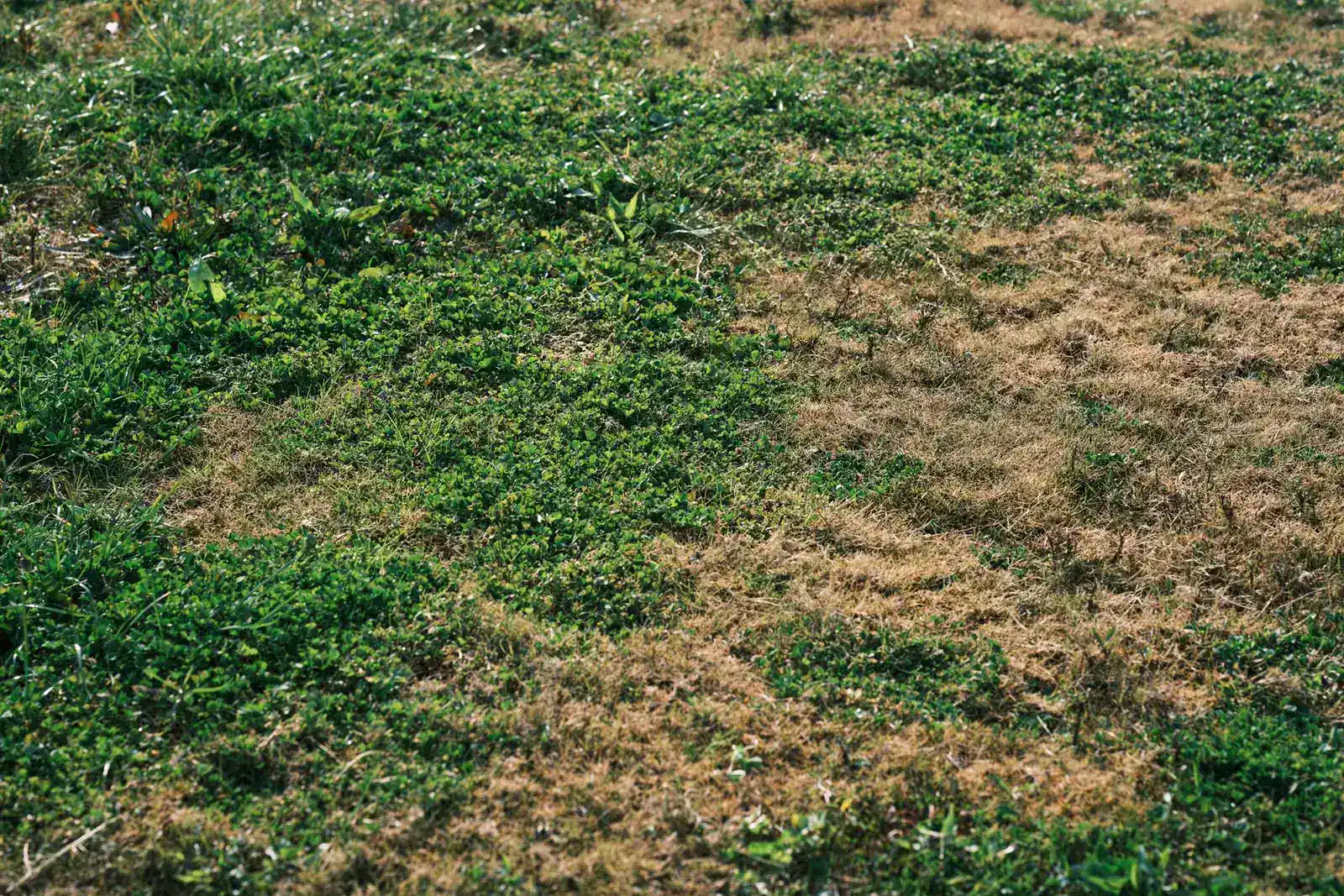
Brown patches in late summer send many homeowners straight to the grub control aisle. Sometimes that is right. Often the grass is simply dry, or the dog has a favorite spot.
Treating grubs you do not have wastes money and puts insecticide on the lawn for no reason. A few minutes of checking tells you what you are dealing with.
Key figures
- about 12 Grubs per square foot, Illinois damage benchmark
- 20 or more Grubs per square foot healthy turf may tolerate
The tug test
Grab a handful of brown grass and pull.
- It lifts like a rug with almost no roots: likely grubs. They eat roots just below the surface.
- It stays anchored: roots are intact, so look at water or other causes.
Count before you treat
Cut three sides of a one-foot square of turf about 2 to 3 inches deep, fold it back and count the C-shaped white larvae. Check a few spots at the edge of the brown area, where grubs are still feeding.
The University of Illinois Extension says a population of about 12 grubs per square foot can typically cause damage that requires control. Iowa State notes that healthy turf can sometimes tolerate 20 or more before showing injury, and that damage often appears suddenly when dry weather hits roots already weakened.

How to spot the other culprits
| Cause | What it looks like |
|---|---|
| Grubs | Irregular patches, turf peels back, animals digging |
| Drought | Large areas, often on slopes or near pavement, grass anchored firmly |
| Dog urine | Round spots with a ring of darker green grass around them |
| Dull mower blade | Whole lawn has a whitish or brown cast, torn tips |
| Uneven sprinkler | Brown spots in the same places the water does not reach |
If you do have grubs
Timing matters more than the product. Preventive grub products work best when applied before or while eggs hatch, typically early to mid summer in much of the country.
Curative products applied in late summer or fall act on larger grubs and are less forgiving. Always follow the label, which is a legal requirement for pesticides.
Before treating, check with your state extension office for local timing and products. Watering after application is usually needed to move the product into the root zone.
Animals tearing up the lawn at night are often digging for grubs. It is a sign to check, not proof on its own.
Fixing the damage
Rake out dead turf and reseed in late summer or early fall for cool-season lawns. Keeping the lawn watered through dry spells helps it outgrow moderate grub feeding without any treatment.
Related reading: Seed or Sod: Choosing How to Start a New Lawn and Fall Is When Cool-Season Lawns Need Fertilizer Most.
Questions people ask
How many grubs per square foot is too many?
Illinois Extension puts the damaging level at about 12 per square foot. Healthy, watered lawns can tolerate more.
When is the best time to treat for grubs?
Preventive products work best in early to mid summer, before grubs grow large. Check local extension timing and follow the label.
Will brown grass from drought come back?
Often yes. Many cool-season lawns go dormant in drought and green up when rain returns. Pull on it: firmly rooted grass is usually alive.
How do I fix dog urine spots?
Water the spot soon after the dog uses it to dilute it, and reseed dead patches. Training the dog to use one area also helps.
Where these figures come from
- Dealing with Grubs in Lawns University of Illinois Extension · extension.illinois.edu
- White Grub Control in Turfgrass Iowa State University Extension · yardandgarden.extension.iastate.edu
Figures last checked September 2026.