On this page
A well and septic care budget combines several different kinds of expense: testing, scheduled maintenance, consumable parts, occasional pumping and repairs. The water supply and wastewater system should have separate records, even when the same household pays both. A septic inspection cannot establish drinking-water quality, and a water test cannot inspect a damaged septic pump.
Published prices can show how the ledger works. Indiana’s health laboratory lists $10 bacteria and $10 nitrate tests; FJR lists a $335 annual maintenance contract in the San Antonio area; SpringWell lists a $118.65 replacement lamp matching its UV system. These are distinct organizations’ current reference prices checked October 2026, not one national package or services available to every property.
Key figures
- $10 Indiana laboratory bacteria test, shipping extra
- $335 FJR yearly septic contract, repairs charged separately
- $118.65 SpringWell UV system's compatible yearly replacement bulb
An equipment inventory prevents buying the wrong maintenance
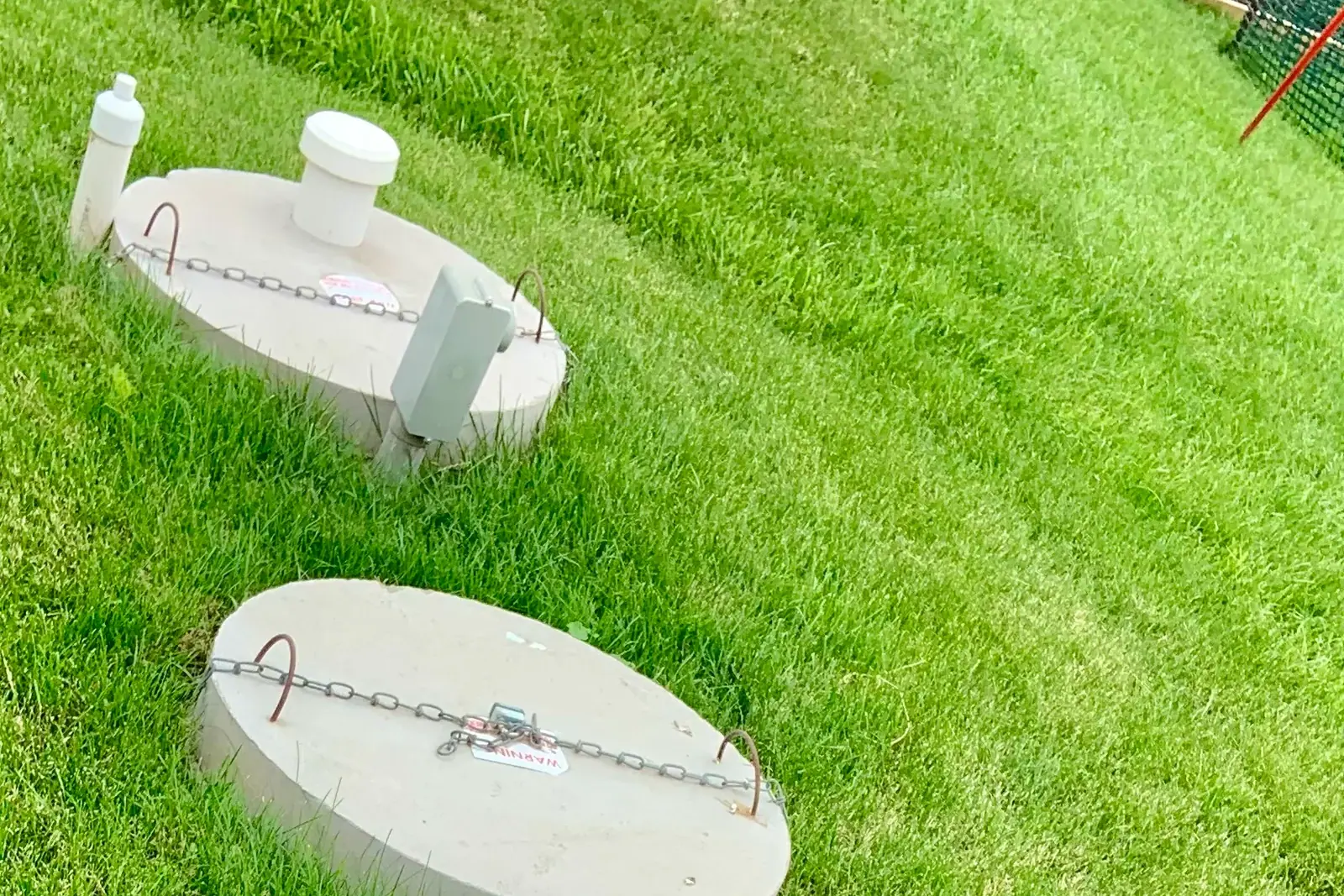
Start with the well record, septic permit, site diagram and installed equipment. Record pump and tank models, treatment components, control panels and service access. A generic annual care label does not reveal whether the budget covers a conventional gravity tank, an aerobic treatment unit or a water system with several filters.
Identify which company handles each component. A pumping contractor may inspect the tank without servicing a UV controller, while a water-treatment company may replace lamps without evaluating septic dispersal. Keep each provider’s scope and contact details beside the corresponding budget line.
List the next due task from the manufacturer’s instructions, permit and service report. Do not assume that every part requires yearly replacement or that every visit includes every component. A reusable sleeve that needs cleaning is different from a consumable lamp that reaches its service interval.
The septic maintenance agreement guide helps define bundled work. If a contract already includes a task, mark it covered rather than paying for the same assumed service again elsewhere in the budget.
Water testing has an analysis fee and delivery requirements
Indiana’s laboratory lists $10 for bacteria, $10 for nitrate, $10 for fluoride and $20 for its arsenic, lead and copper analysis. Those published fees exclude shipping. The wider panel’s stated $20 is not silently multiplied by three as though it were a separate fee for each metal.
Two $10 analyses total $20 before shipping or other tests. Adding the listed fluoride and metals analysis makes the illustrated analysis subtotal $50. That is the arithmetic of the cited laboratory menu, not a declaration that the panel covers every contaminant at a particular well.
EPA recommends annual testing for total coliform bacteria, nitrate, total dissolved solids and pH, plus tests prompted by local risks. Indiana’s bacteria-and-nitrate price pair therefore should not be described as the price of all EPA-recommended annual testing. Ask the selected certified laboratory what the property’s panel includes.
Follow the laboratory’s bottle, handling and delivery instructions. Return shipping and the time limits for a sample are different from paying to have a collection kit sent out. An inexpensive analysis has no value if a mishandled sample cannot be interpreted or has to be collected again.
Recurring lines and one-time work stay separate
| Published reference or stated planning assumption | Amount | Budget treatment |
|---|---|---|
| Indiana bacteria test | $10 | Analysis fee, shipping excluded |
| Indiana nitrate test | $10 | Analysis fee, shipping excluded |
| FJR annual septic agreement | $335 | Scheduled contract, with exclusions |
| Matching SpringWell UV lamp | $118.65 | Part at stated yearly interval |
| Hypothetical separate filter visit | $125 | Only if not already covered |
| Hypothetical $500 pumping every 4 years | $125/year | Reserve allocation, not service fee |
Sources: Indiana Department of Health laboratory, FJR’s own agreement and SpringWell’s official product page, checked October 2026. The filter amount, pumping cost and four-year interval are hypothetical. Examples combine separate regional references to explain budgeting, not to promise a bookable bundle. Shipping, labor and additional testing are not included.
The first four listed recurring price lines total $473.65 before delivery, service labor and additional tests. With the assumed separate $125 filter visit, the illustration is $598.65. Adding the assumed $125 annual pumping reserve gives $723.65, approximately $60.30 per month. Actual schedules and coverage should replace those assumptions before funding a household plan.
Remove the filter allowance if the agreement already includes that service. Add lamp-replacement labor if the cited $118.65 part is not installed by the household under the manufacturer’s allowed procedure. Neither omitting a labor line nor counting a bundled task twice improves the accuracy of the comparison.
Pumping is an irregular bill that a reserve can spread
EPA gives a typical household pumping interval of 3–5 years, affected by household size, wastewater volume, solids and tank size. Use the service provider’s measurements and report to plan the next pumping visit. The four-year assumption in the table sits inside that general interval but is not a recommendation for every tank.
If an assumed $500 bill were due every three years, spreading it evenly would allocate about $166.67 per year. Every five years would allocate $100. Those are reserve calculations, not alternative pump-out prices. The system’s condition determines the service timing, and a budget preference cannot justify extending it.
Ask whether access, locating and disposal are included in the pumping estimate. Keep a quote for easier access separate from the pump-out itself. A riser purchase can change later digging requirements without changing how quickly solids accumulate in the tank.
The riser installation cost guide explains component and opening counts. Record that one-time assembly purchase as a project; do not multiply it into a yearly maintenance allowance once it is already installed.

A reserve’s starting balance matters before the next large bill
Consider an invented starting balance of $300 with six monthly contributions of $60.30. Contributions total $361.80 and the available balance is $661.80. An assumed $500 service bill leaves $161.80. With no starting balance, those same contributions would still be $138.20 short of the bill.
The illustration explains timing, not the amount a household should save. A repair already diagnosed belongs on the ledger at its approved scope and payment dates. An uncertain future equipment failure belongs as an allowance, clearly labeled unquoted, rather than as an apparently verified contractor price.
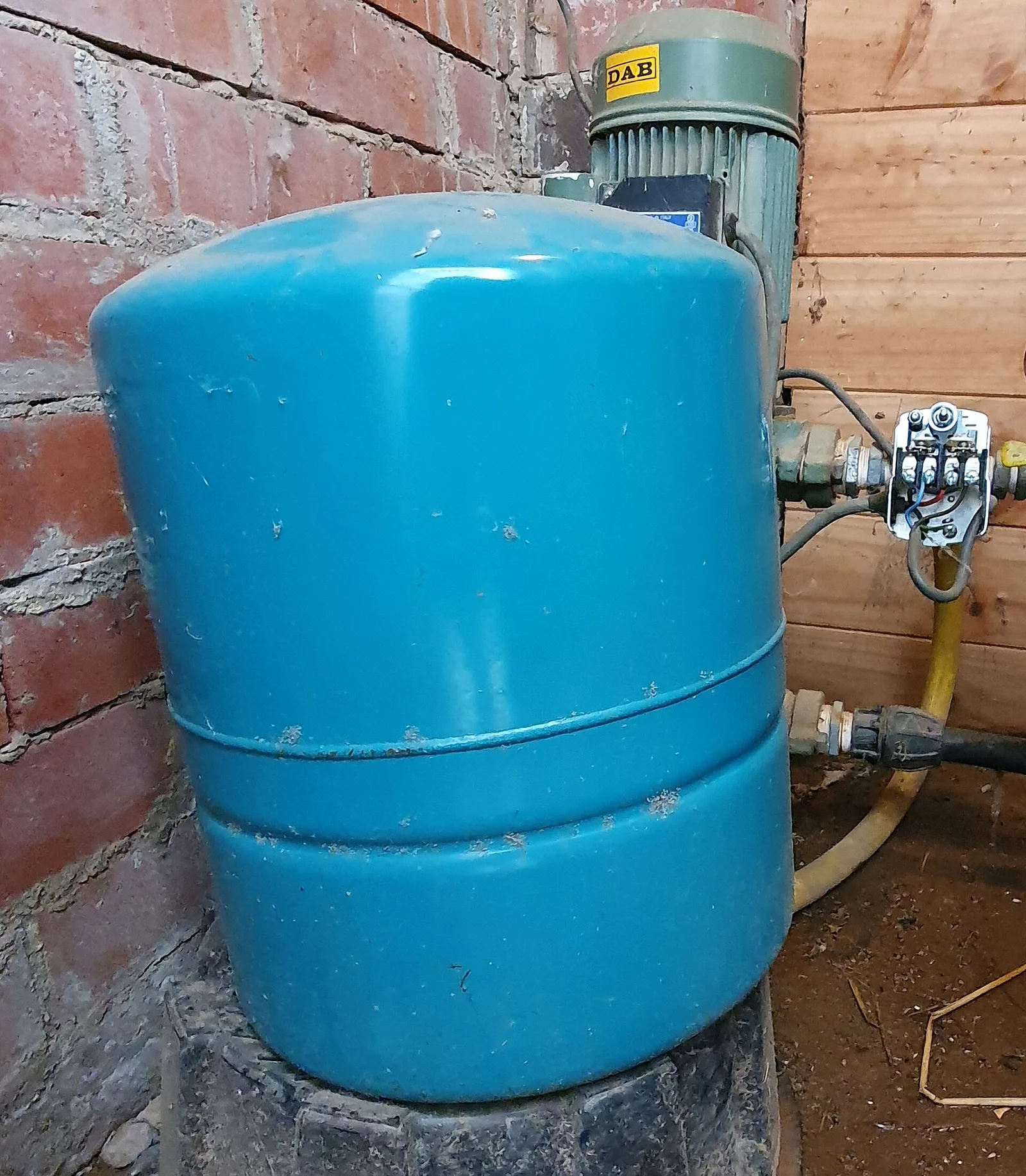
For replacement jobs, record diagnosis, installed parts, commissioning and follow-up testing separately. A pump or pressure tank price can omit access, wiring and connections. Treat the final installed estimate as the project’s obligation rather than trying to fund only the cheapest catalog component.
Water quality and system failure take priority over routine scheduling
EPA recommends testing after well-system repair and after conditions such as flooding or a change in water quality. Record that follow-up in the job scope. Do not assume a service visit proves potable water simply because the pump works again and the tap runs clear.
Contact the public health department about suspected unsafe well water and use a safe source as directed. Report sewage backups, surfacing effluent and system alarms promptly. Keep people away from contaminated water, open tanks and electrical hazards rather than waiting for the next planned visit.
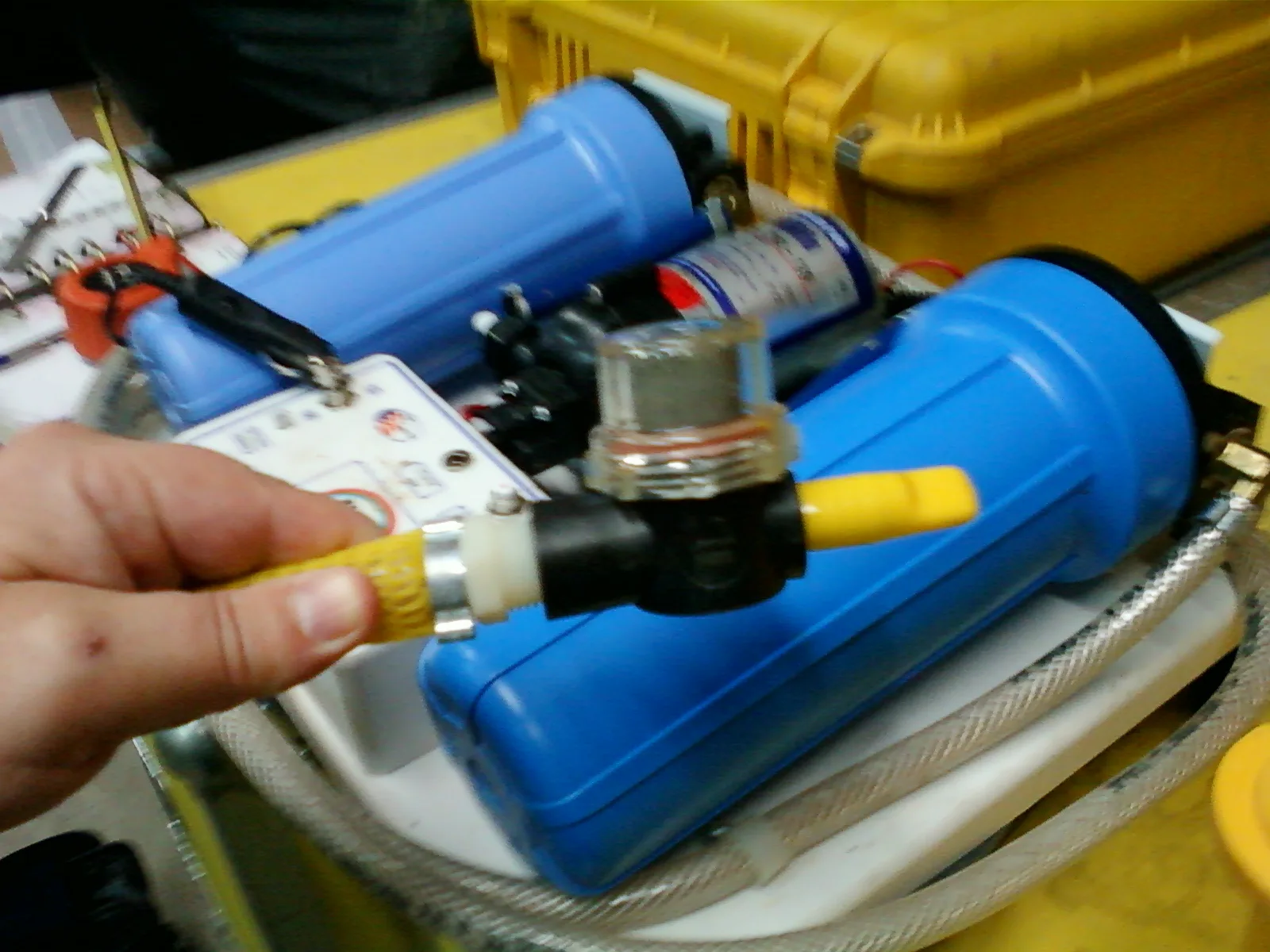
The private-well UV cost guide separates germ treatment from chemical removal. Buy equipment against tested contaminants and operating conditions, then fund its stated maintenance. A generic treatment upgrade is not a substitute for identifying the water problem or correcting the source.
Keep invoices, test results, service reports and the updated site diagram together. At renewal, remove completed project allowances and check the remaining recurring lines against current prices and coverage. That produces a budget based on equipment and obligations instead of an unexplained percentage of the home’s value.
Questions people ask
Do two $10 tests cover every well risk?
No. They are two analyses from the cited menu. EPA recommends other routine measures and local risks can require additional tests; define the panel with the certified laboratory.
Is $125 the yearly cost of pumping?
It is a reserve allocation from an assumed $500 bill every four years. The service invoice and the system's required interval remain separate.
Should filter cleaning be added to a maintenance contract?
Add it only if the contract does not already cover the task. Read the equipment and service scope before counting a separate visit.
Does a paid service visit prove the well water is safe?
No. Keep mechanical performance, treatment checks and laboratory verification separate, including required follow-up after repairs or contamination events.
Where these figures come from
- Private-well laboratory test menu and fees Indiana Department of Health · in.gov
- Current septic maintenance fee and exclusions FJR Septic Installers LLC · fjrsepticinstallers.com
- UV matching-lamp price and replacement interval SpringWell Water Filtration Systems · springwellwater.com
- Septic service and pumping intervals US Environmental Protection Agency · epa.gov
- Private-well testing and protection US Environmental Protection Agency · epa.gov
Figures last checked October 2026.