On this page
Every termite company sells one of these as the modern answer and the other as the thing their competitors still do. Both are legitimate, both are registered, and the right one depends far more on how your house sits in the ground than on which salesperson was more convincing.
What each one actually is
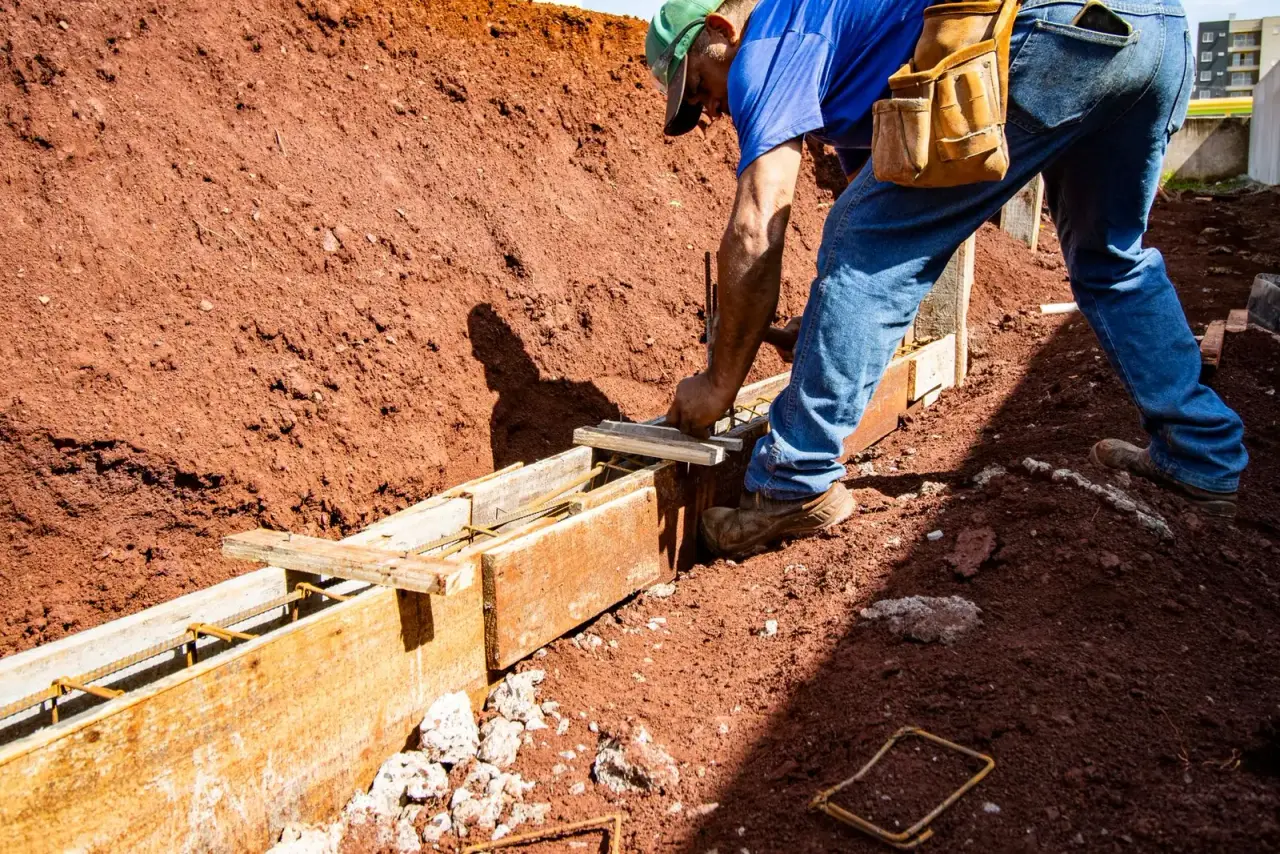
The liquid barrier. The most common technique for subterranean termites, and the one that has been refined for decades. A termiticide is applied to the soil around the foundation, and under it where concrete covers the ground, creating a continuous treated zone. UC IPM describes the application as drenching or injection, with modern non-repellent actives including fipronil, imidacloprid and chlorantraniliprole.
Non-repellent matters. An older repellent product pushed termites away, which sounds good until you realize they simply looked for the gap. A non-repellent is undetectable to the termites, so they walk through it, pick it up and carry it back through the colony on contact.
The bait system. Stations are installed in the soil at intervals around the building. Each contains a cellulose matrix with a slow-acting insecticide. Foragers find it, feed, share it and the colony declines. The EPA notes that bait systems can reduce overall pesticide use compared with a full soil treatment, which is a real advantage if you have a well, a vegetable garden or small children who live in the yard.
Speed versus patience
This is the honest difference, and it is the one companies soften.
A correctly applied barrier begins protecting immediately, because the treated soil is there the day the crew leaves. Termites already inside the structure die off as they cross it to return to the soil, which for subterranean species they must do.
Bait works at the pace of termite foraging. UC IPM’s assessment is that bait station systems can be effective in some cases but may take several months or even years to control the problem. If you have active damage and a sale closing in sixty days, that is not a tolerable pace. If you are protecting a house that has never had an infestation, it is perfectly reasonable.
What the building decides for you
| Situation | What it pushes you toward | Why |
|---|---|---|
| Slab-on-grade with patios and a garage | Bait, or an expensive barrier | The treated zone has to be continuous, so every foot of concrete is drilled, injected and patched |
| Accessible crawl space, soil perimeter | Barrier | The soil is reachable, so the work is straightforward and the zone is easy to make continuous |
| A private well or a cistern near the house | Bait | Less pesticide in the soil, and label setbacks around water sources restrict where a barrier may be applied |
| Heavy plantings tight against the foundation | Either, with landscaping work first | Roots and shrubs obstruct both, and the plants may have to be cut back or removed |
| A confirmed active infestation eating the sill | Barrier, usually | Speed matters more than pesticide volume when the structure is being consumed now |
| Drywood termites, no soil contact | Neither | Different insect, different treatments entirely: local treatment or whole-structure fumigation or heat |
The parts of the sales pitch to discount
“Baits are the green option.” Less pesticide, yes, and that is worth something. But a bait station contains an insecticide, and its active ingredient is designed to be carried into a colony. Green is a comparison, not a category.
“Barriers last for years so you need nothing else.” Treated soil degrades, and it gets disturbed every time somebody digs a flower bed, replaces a drain or pours a step. The annual inspection is the mechanism that finds the breach.
“Our product is exclusive.” Product labels are public documents. Ask for the label of whatever they intend to apply, and read the directions and the rates. The EPA says reliable applicators will provide copies of labels showing application rates and precautions.
Whichever method you buy, the maintenance contract is what keeps it working. For baits, the monitoring visit is the treatment. For a barrier, the annual inspection is what finds the new mud tube after somebody trenched through the treated zone to run a cable. Cancel the contract and you have not saved money, you have just stopped watching.
Questions that get you a straight answer
- Which species did you find, and what did you see? Mud tubes, damaged wood, live insects, discarded wings. Findings, not a category on a form.
- Where is the treated zone or the station ring going, exactly? Ask for it on the diagram.
- How many feet get drilled? This is the single largest price variable on a barrier quote.
- How often do stations get checked, and what does a missed visit do to the guarantee?
- What is the retreatment trigger? Live termites, new damage, or a finding at an annual inspection.
- What happens if I sell the house? Many contracts transfer, some do not, and a transferable one is worth money on a closing statement.
The unglamorous third option
Neither treatment fixes a house that keeps inviting termites in. Physical and cultural controls are cheap and permanent, and the EPA lists them: keep soil around the foundation dry with proper grading and drainage, maintain gutters and downspouts, fix leaks quickly, keep trees and shrubs off the structure, and do not pile or store firewood or wood debris next to the house. UC IPM adds the specific target to aim for: a twelve-inch barrier of smooth concrete, coarse sand or other inorganic material between the soil surface and structural wood.
Do that work and whichever treatment you buy has a much easier job.
Related reading: The Free Work That Keeps Termites Away and A Termite Renewal Needs a Written Coverage Comparison.
Questions people ask
Which is better, termite bait or liquid treatment?
Neither is better in general. A liquid barrier protects from the day it is applied and suits accessible soil perimeters; a bait system uses less pesticide but UC IPM notes it may take several months or even years to control a problem. Active structural damage usually argues for a barrier, a well or heavy concrete usually argues for bait.
Do termite bait stations really work?
They can. Foragers take a slow-acting insecticide in a cellulose matrix back to the colony. The catch is time and maintenance: results can take months to years, and the stations must be serviced on schedule or the system stops being a treatment.
Why does the company want to drill my patio?
Because the treated soil zone has to be continuous to work, and concrete covers the soil. Wherever a slab, patio, porch or garage floor sits over the treatment line, they drill, inject and patch. Those feet are the most expensive part of a barrier quote.
How long does a liquid termite barrier last?
It depends on the product, the soil and what gets disturbed afterwards. Digging a bed, running a new drain line or pouring a step can breach the treated zone, which is what the annual inspection exists to catch. Guarantees commonly run one to five years.
Where these figures come from
- Termites: How to Identify and Control Them US Environmental Protection Agency · epa.gov
- Subterranean and Other Termites Management Guidelines University of California Statewide IPM Program · ipm.ucanr.edu
- Choosing a Pest Control Company US Environmental Protection Agency · epa.gov
Figures last checked September 2026.