On this page
A home energy audit is a purchase of measurements and a plan for deciding which work to buy. It is most valuable when competing explanations for high bills or uncomfortable rooms would lead to different repairs. Paying for a visit that only sells equipment does not provide the same evidence as an audit with testing and a report.
Prices below come from an Oregon provider’s current service page and a Connecticut utility-backed program, checked in October 2026. They show why an independent retail fee and a subsidized customer copay cannot be treated as a national price range for identical work. Eligibility, tests, reports and project-credit conditions belong beside the price.
Key figures
- $400 GreenSavers audit, credited toward an accepted project
- $40 Connecticut Home Energy Solutions copay, eligibility applies
The fee depends on the service and its funding
GreenSavers’ current energy-audits page publishes a four-hundred-dollar fee. It says that amount is credited toward the project total when the homeowner moves forward with the proposal. The provider serves Portland and Bend; the offer is not an audit price available at every US address.
Connecticut’s Home Energy Solutions program publishes a forty-dollar initial-visit copay effective April first, 2026. The program page says participation is available when the home has not received these program services within the last six years, alongside other eligibility and safety requirements. Confirm the account, home and program rules before expecting the copay.
| Published option | Price to the customer | Main comparison issue |
|---|---|---|
| GreenSavers energy audit, Portland and Bend | $400 | Testing and report scope; credit if accepting its proposal |
| Connecticut Home Energy Solutions initial visit | $40 copay from April 1, 2026 | Program eligibility, prior participation and included services |
| Separate improvement after either visit | Its own quoted price | Audit payment does not automatically buy the recommended work |
Source note: GreenSavers’ live energy-audits service page and Energize Connecticut’s Home Energy Solutions page, checked in October 2026. These options operate in different service areas and funding programs, so the table is not a like-for-like local bid comparison.
An old provider page or an older utility evaluation can show a fee that no longer applies. Use the current booking terms and keep a copy of the price and scope. A lower customer copay may reflect program funding rather than a shorter or less thorough visit.
The report determines whether the findings travel
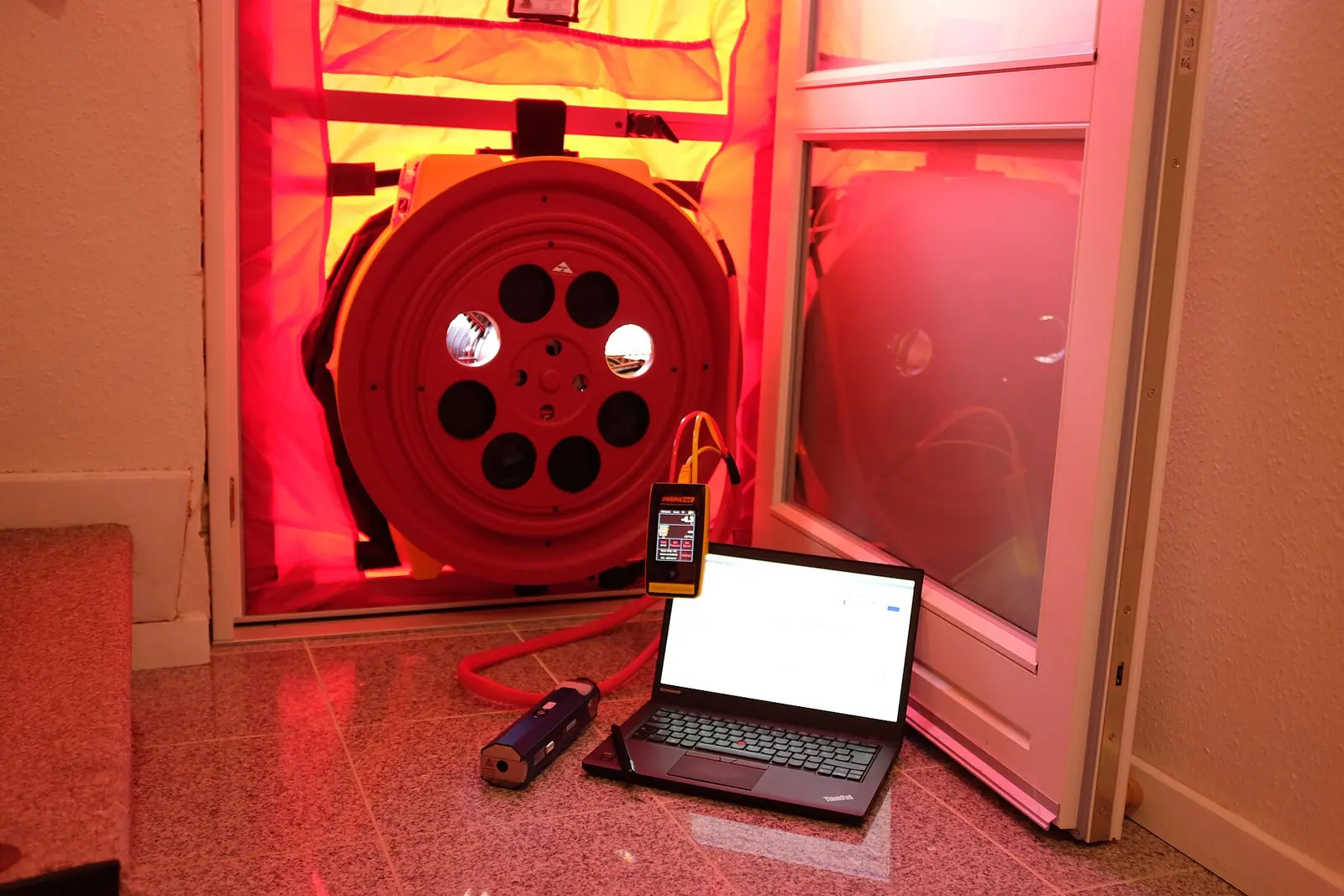
GreenSavers describes a Home Performance Report with prioritized recommendations. Its current page lists possible diagnostic work including infrared imaging, a blower-door test, mechanical inspection, attic and crawlspace inspections, and combustion-safety testing, depending on the home and scope. Ask which of those are included in the booked visit.
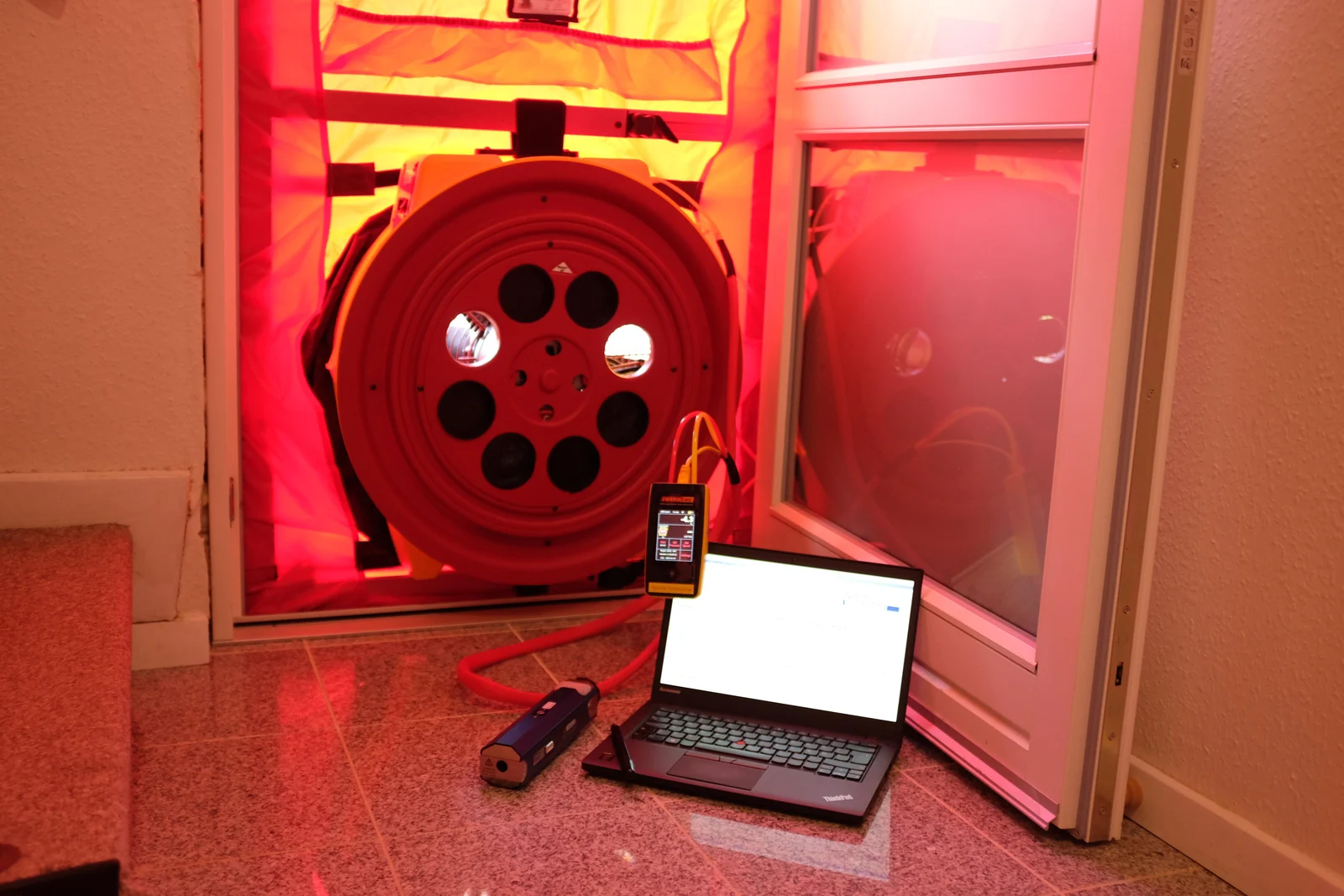
A blower door measures air leakage under test conditions; an infrared image shows temperature patterns. Neither phrase on a sales page explains how the result will be interpreted or which repairs will follow. Ask for the measured results, identified problem areas, assumptions behind savings estimates and a copy of the report.
The DOE home-energy-assessment guide describes preparing a problem list and recent utility bills before a professional assessment. Include drafts, room-temperature differences, condensation and changes in occupancy or equipment. Give consumption figures as well as dollar totals so a rate increase is not mistaken for a building defect.
The air-leak guide explains the building paths that an assessment may investigate. The attic-insulation quote guide shows how a diagnosis becomes a scope that contractors can price. An audit that identifies a location and a remedy is easier to use than a recommendation to “improve efficiency.”
A Home Energy Score answers a different question
DOE’s Home Energy Score rates estimated home energy performance on a one-to-ten scale. The score helps describe the home’s building and systems using a standardized method. It is not a measurement of the current resident’s entire bill and should not be converted directly into a promised percentage reduction.
A move from a score of four to a score of six does not mean the bill will drop by fifty percent. The numbers are positions on a rating scale, not proportional energy-use units. Ask whether the offered visit produces a Home Energy Score, a diagnostic report, both or neither.
The score and a longer report can also serve different purposes. A score may help with property comparison, while a diagnostic report can locate leakage or describe a repair sequence. If a transaction requires a particular assessment, confirm the accepted assessor and report before buying a different service with a similar name.
Project credits change the invoice rather than the diagnosis
Suppose an assessment costs $400 and a later improvement is quoted at $2,000. Without a project credit, the combined spending is $2,400. If the provider applies the full assessment payment against the quoted improvement, the combined spending is $2,000. The credit removes double payment of that amount; it does not make the improvement itself free.
Now suppose another contractor offers the same improvement for $1,700 without honoring the assessment credit. Buying that work after the $400 audit totals $2,100. The credited $2,000 proposal is then $100 lower, provided scope and workmanship terms match. A hypothetical $1,500 competing bid would instead total $1,900 and be cheaper despite losing the credit.
Those improvement prices are comparison assumptions, not GreenSavers quotes. They show why a project credit should be evaluated beside the final installed price. Ask when the credit expires, which work qualifies and whether the proposed price already includes it.
Savings estimates require a baseline and a sequence
An audit fee does not itself save electricity. Its value comes from avoiding unsuitable work, improving comfort or directing money toward changes with better returns. Separate the assessment charge from the cost and modeled savings of each recommendation.
For a hypothetical improvement costing $2,000 and saving $200 a year, simple payback is ten years before financing and upkeep. Including a separate $400 assessment raises that example to twelve years. A credit changes the cost calculation; a weak savings estimate cannot be repaired by subtracting a credit.
Ask which unit rates, weather assumptions and existing conditions were used. Estimates for insulation, air sealing and equipment can overlap, so adding every advertised saving may count the same avoided energy twice. The energy-upgrade payback guide explains the need to compare projects against one baseline.
Ask the assessor how combustion appliances, ventilation and other safety concerns are checked before major air-sealing work. Use a building-performance professional to interpret test findings and repair priorities; do not treat a thermal image alone as proof that a wall requires demolition.
Before booking, obtain the price, eligibility conditions, included tests, access requirements, report format and project-credit terms. Afterward, request repair descriptions that another contractor can understand. That makes the assessment a decision tool instead of an obligation to purchase the first proposed installation.
Questions people ask
What does the cited Oregon provider charge?
GreenSavers' current energy-audits page lists $400 and says the payment is credited toward the project total if the customer proceeds with its proposal. Confirm the booked scope and credit terms.
Is the Connecticut initial-visit copay still $75?
The current Home Energy Solutions page lists $40 effective April 1, 2026. Eligibility and prior-participation rules apply; an older program document should not replace the current offer.
Does a Home Energy Score of 8 guarantee low bills?
No. The 1–10 rating describes modeled home energy performance. Occupancy, use, weather and tariffs still affect bills, and a score is not a dollar-savings guarantee.
Can the audit be worthwhile without immediate upgrades?
Yes, if the report resolves an expensive decision, identifies a repair sequence or avoids unnecessary work. Ask whether findings and measurements are provided in a form you can retain and use with other contractors.
Where these figures come from
- Energy Audits and Net Zero Planning: Current Fee and Project Credit GreenSavers · greensavers.com
- Home Energy Solutions: Initial Visit Copay and Eligibility Energize Connecticut · energizect.com
- Home Energy Assessments US Department of Energy · energy.gov
- Home Energy Score US Department of Energy · energy.gov
Figures last checked October 2026.