On this page
An advanced power strip can make turning off unused electronics automatic. Its value depends on the devices connected, their standby draw and how long their power can be interrupted. Buying a strip for equipment that already sleeps at a very low draw can produce a long payback despite a prominent savings claim.
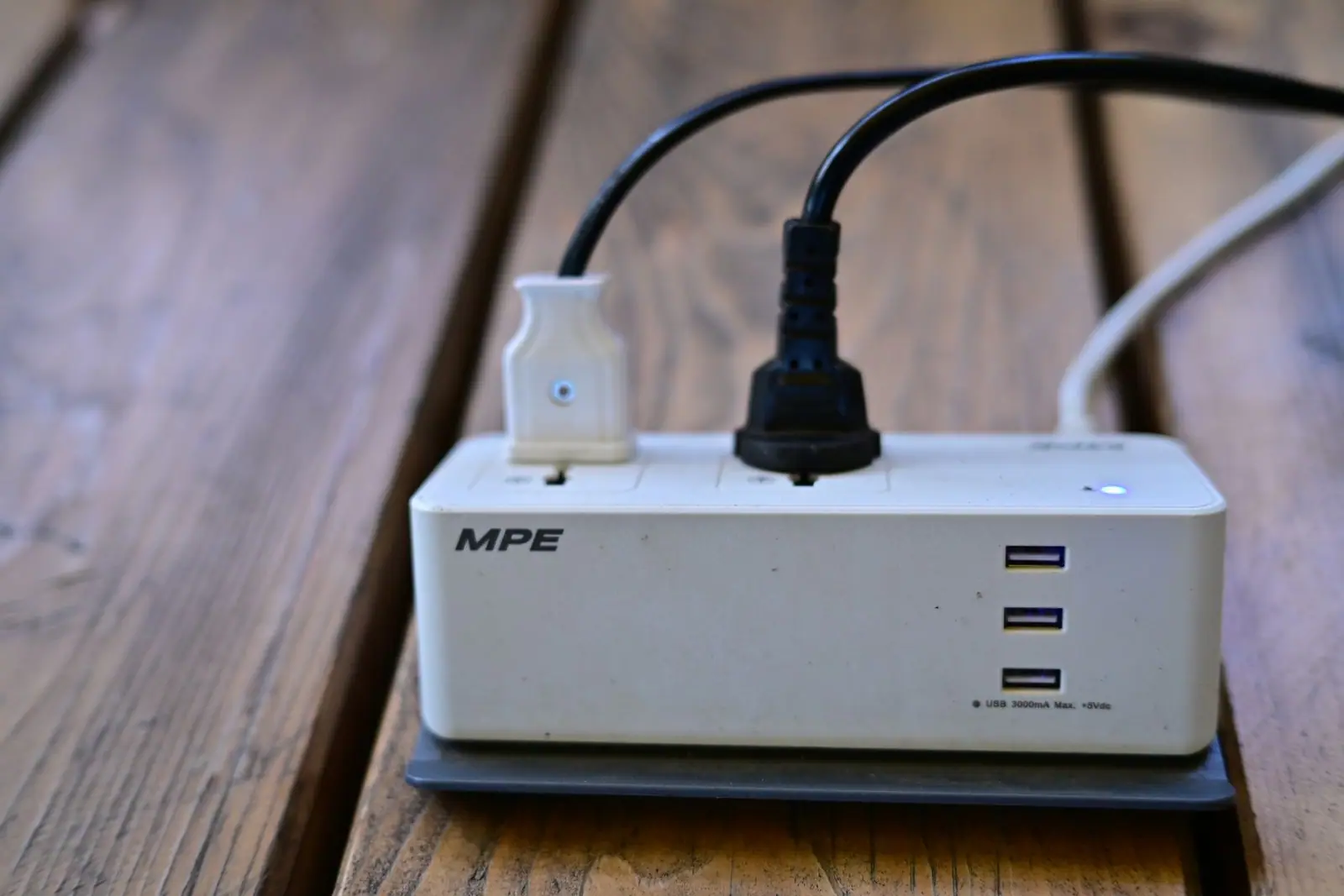
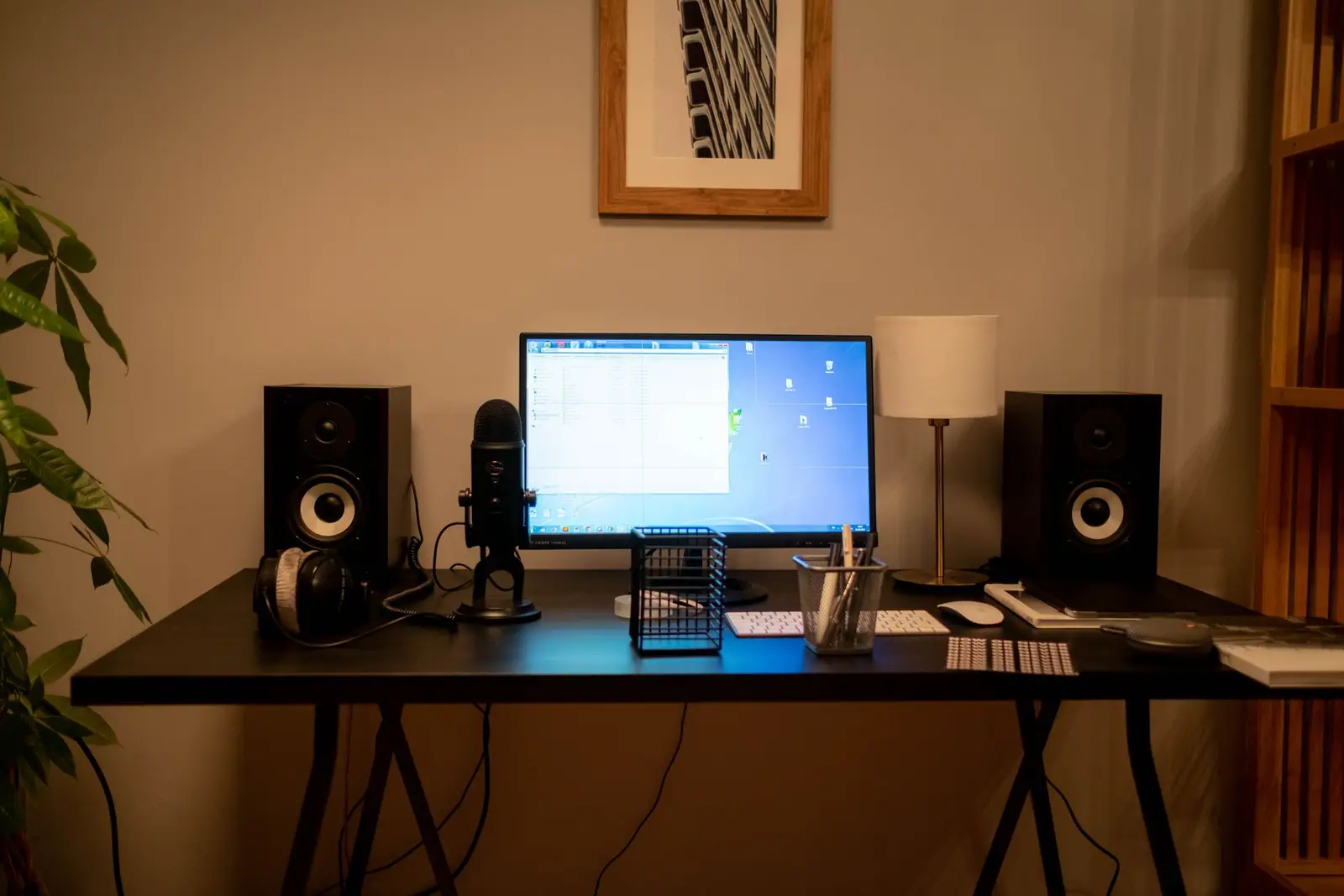
The decision is easiest with a measured standby load and a named product price. This guide uses current manufacturer listings and clearly assumed loads to show the arithmetic. The existing photographs illustrate a power strip and a computer setup; they do not identify the photographed strip as one of the priced models or establish its control features.
Key figures
- $19.99 Plugload PL07 power strip, out of stock
- $24.99 TrickleStar TS0006 PowerTap, four outlets
- $59.99 TrickleStar TS1006 PowerStrip, twelve outlets
The listed products span $19.99 to $59.99
| Manufacturer listing | Published price | Outlet count | Budget distinction |
|---|---|---|---|
| Plugload PL07 | $19.99 | 7 | Product page says out of stock |
| TrickleStar TS0006 PowerTap | $24.99 | 4 | Smaller outlet format |
| TrickleStar TS1006 PowerStrip | $59.99 | 12 | More connection positions |
Source note: TrickleStar U.S. product and collection pages, checked October 2026. These are published hardware listings, before any tax, shipping or local utility subsidy. Confirm availability and each model’s instructions before purchase.
- Plugload PL07$19.99
- TrickleStar TS0006 PowerTap$24.99
- TrickleStar TS1006 PowerStrip$59.99
Source note: TrickleStar U.S. product and collection pages, checked October 2026. These are published hardware listings, before any tax, shipping or local utility subsidy. Confirm availability and each model's instructions before purchase.
A price range within one manufacturer is not a national market average. It also does not mean that the least expensive listing can be delivered today. The PL07 collection shows a price while its individual page says it is unavailable, so a worksheet using that price should retain the stock limitation.
Count the devices that need switched power separately from devices that must stay on. A twelve-outlet model can be unnecessary for a small television group, while a small strip can run out of positions or space for large adapters. Compare the outlet layout and cord length, not the count alone.
A control outlet and a switched outlet perform different jobs
The PL07 product page describes one control outlet, two always-on outlets and four energy-saving outlets. A television or computer in the control outlet determines when the switched peripherals lose power. Always-on positions remain energized independently of that decision.
This arrangement differs from an ordinary surge strip. A surge rating addresses voltage protection; it does not establish automatic standby control. A manually switched strip can cut the same group if someone reliably turns it off, so automation should be compared with the household’s existing routine rather than with permanent full-power operation.
Check which equipment shares the session. A monitor and speakers may be used with the computer, while a router, recording device or other shared equipment may be needed when the computer is off. The manufacturer’s page specifically directs gaming consoles requiring continuous power to an always-on outlet.
The home energy monitor comparison separates circuit measurements from plug-level observations. For this small purchase, a compatible plug-in meter can often answer the standby question more directly than a whole-panel monitor.
Measured watts and off-hours determine annual savings
Virginia Cooperative Extension explains the energy calculation: watts multiplied by operating hours, divided by 1,000, gives kWh. For avoided standby consumption, use the watts that disappear when the peripheral group is disconnected and the hours it can remain disconnected.
Assume the group can be off for 16 hours daily throughout 365 days. At 5 watts, the annual avoidable consumption is 29.2 kWh; at 10 watts it is 58.4 kWh. At 20 watts it is 116.8 kWh, and at 30 watts it is 175.2 kWh. These loads are sensitivity assumptions, not measurements of a television, console or computer.
Using EIA’s July 2026 U.S. residential benchmark of 18.31 cents per kWh, those quantities cost about $5.35, $10.69, $21.39 and $32.08 respectively. Replace the benchmark with the variable tariff charge on the household bill. A fixed account charge does not disappear when a peripheral turns off.
Measure the difference under the same conditions: devices off but connected, then disconnected. Do not use their maximum label wattage as the standby load. A speaker’s rated audio output or a computer’s power-supply capacity is not the electricity consumed while waiting.
Low standby consumption can make payback several years
At the assumed 20-watt case, a $19.99 purchase divided by $21.39 annual avoided charges gives about 0.9 years. At the 5-watt case, the same division gives about 3.7 years. A $59.99 purchase in that low-load case would take about 11.2 years before considering the strip’s own draw or whether the assumed routine continues.
These comparisons do not prove that the product will last until payback, nor that an unavailable item can be purchased at its listed price. They show why the load matters more than broad statements about household phantom-power spending. The strip addresses only its connected, interruptible group.
The appliance running-cost guide keeps large active loads separate from standby. Switching off peripherals cannot produce the saving associated with reducing an electric dryer’s operating time or correcting a continuously running heating element.
If devices are already unplugged every evening, the strip has little new avoidable consumption to capture. Its benefit could still be convenience, but count convenience honestly rather than describing existing savings as a new financial result.
A short observation period reveals inconvenient switching
Before adopting the arrangement for the full household, check ordinary sessions: computer sleep, shutdown, restart, charging and any unattended task. A strip that interprets a low-power operating state as shutdown can cut a peripheral at an unwanted time. Follow the model’s setup and threshold instructions rather than disabling equipment functions to force a saving.
Do not put medical equipment, refrigeration, critical networking or other equipment that requires uninterrupted power on an automatically switched outlet. Follow the strip and device manuals, load limits and electrical safety instructions; obtain qualified help when the installation raises an electrical concern.
A successful purchase has a group that can be off, a detectable control device, enough outlet space and a saving supported by measurement. It can also reduce the need to reach behind furniture. Add the cost to the home energy budget as a small targeted project, with the measured baseline recorded for later comparison.
Questions people ask
How much does an advanced power strip cost?
TrickleStar's checked listings show $19.99 for a seven-outlet PL07, $24.99 for a four-outlet TS0006 and $59.99 for a twelve-outlet TS1006. The PL07 product page currently says it is out of stock.
How much money will it save?
Measure the interruptible standby group. An assumed 20 watts off for 16 hours daily avoids 116.8 kWh annually, about $21.39 at the July 2026 national residential benchmark; a 5-watt group saves much less.
Is a surge protector already an advanced strip?
Surge protection and automatic switching are different features. Check for the control method and switched outlets; an ordinary manually switched strip does not automatically detect the control device turning off.
Which devices should stay on?
Keep equipment requiring uninterrupted power outside the automatically switched group. Check recording, networking, charging and device instructions as well as critical equipment before choosing which peripherals can lose power together.
Where these figures come from
- Plugload PL07 Advanced PowerStrip TrickleStar · tricklestar.com
- Product Collection and Published Prices TrickleStar · tricklestar.com
- Estimating Appliance and Home Electronic Energy Use Virginia Cooperative Extension · vtechworks.lib.vt.edu
- July 2026 Residential Electricity Prices U.S. Energy Information Administration · eia.gov
Figures last checked October 2026.