On this page
A line of small ants across the counter is one of the most familiar pest problems in any house, and it is almost always handled the same way: spray the line, wipe it up, and watch it reappear two days later a few inches to the left.
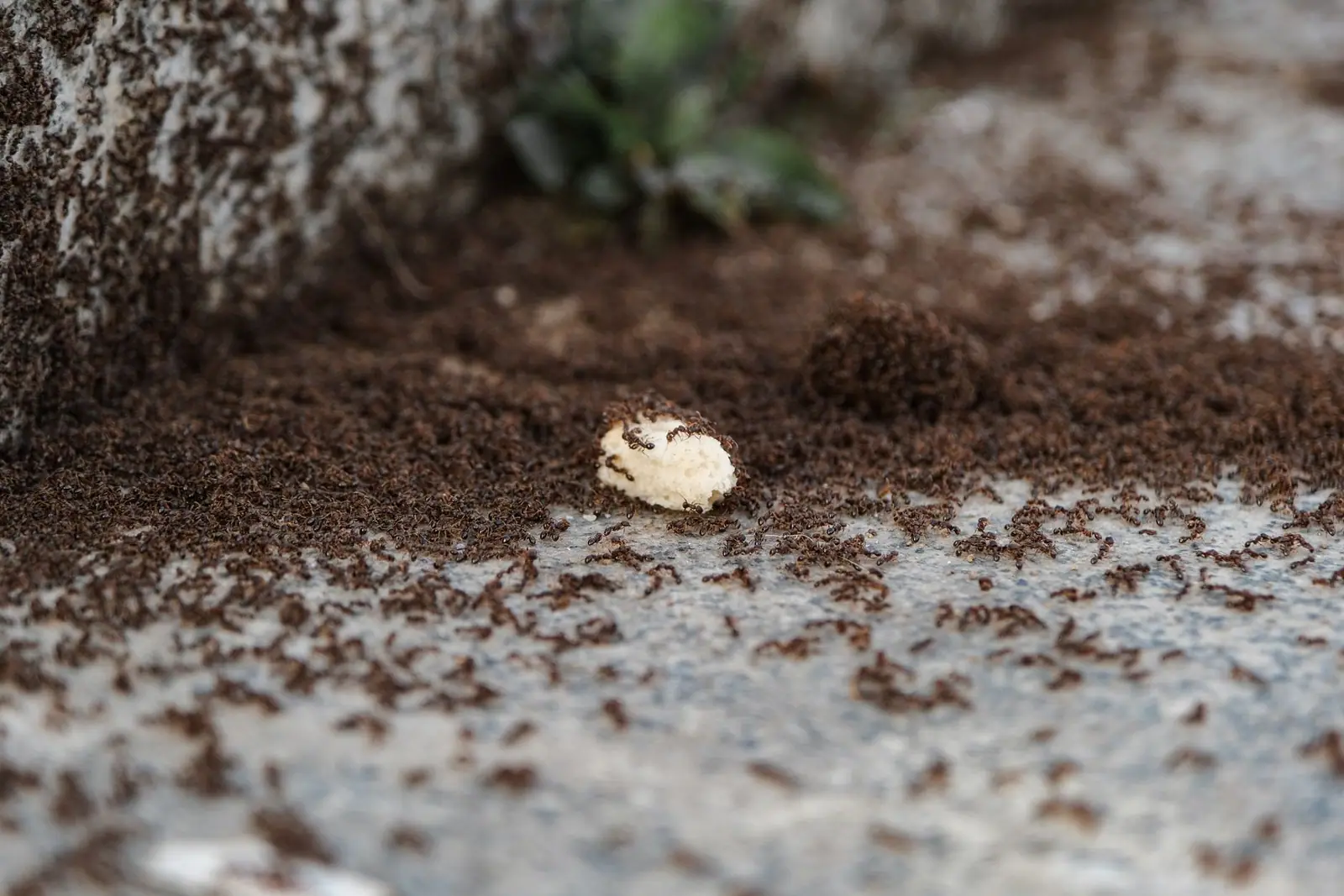
The reason is simple once you see it. The ants on your counter are a tiny fraction of the colony, and the colony is somewhere else.
Why spraying the trail fails
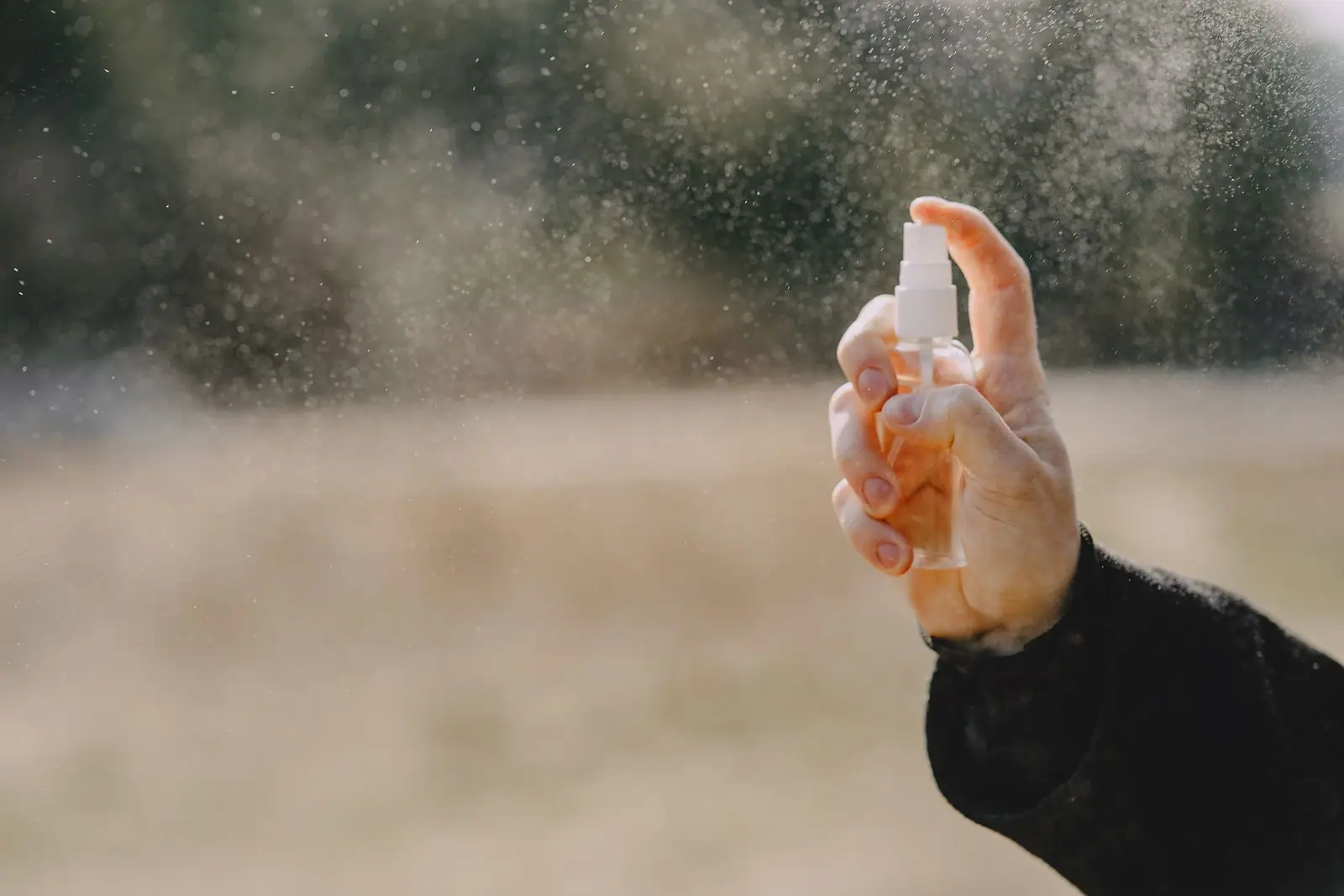
UC IPM puts it plainly: spraying ants indoors with pesticides will not prevent more ants from entering. Perimeter sprays around the house have a similar problem, since they kill only foraging ants without killing the colony and the queens.
Many common household ants, including the Argentine ant, make it harder still. Their colonies, UC IPM explains, are not separate but linked into one large supercolony with many queens. Kill a trail of workers and the colony simply sends more.
Why bait works
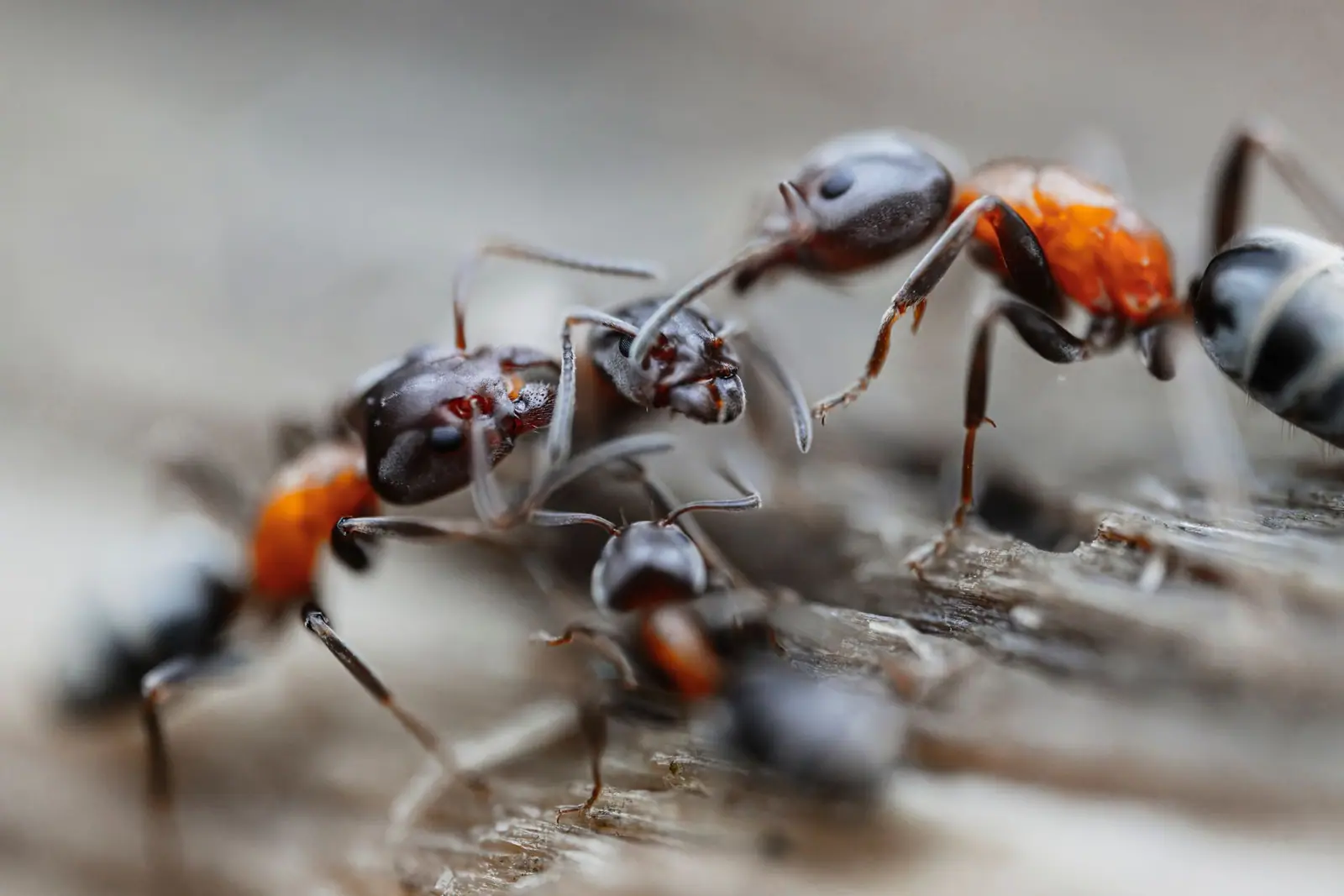
A bait combines food the ants want with a slow-acting insecticide. Workers feed, return to the nest and share the food with other workers, larvae and queens. In UC IPM’s words, the ants take the product back to the nest where the entire colony, including queens, can be killed.
The slow action is the point. A fast poison kills the worker before it gets home.
How long it takes. UC IPM says it can take five to ten days to see fewer ants, and a severe problem may take several weeks. A bait that seems to attract more ants in the first day or two is doing its job: the workers are recruiting others to the food.
Where to put bait
UC IPM’s advice is to use baits primarily outdoors, and indoors only if there is a serious infestation.
- Follow the trail back to where it enters the house, and outside to where it goes.
- Place bait stations outdoors along the trail, near the foundation and near the nest if you can find it.
- If you must bait indoors, put stations right on the trail, away from children and pets, and do not clean around them for a few days.
- Match the bait to the ant. UC IPM lists sweets for Argentine and carpenter ants, and sweets, proteins and grease for pavement ants. If ants ignore a bait, try another type.
- Replace stations when they are empty.
Cleaning up without undoing the bait
You do still need to clean, just in the right order.
- Wipe the trail with soapy water where there is no bait, to remove the scent ants follow. UC IPM notes indoor sprays are not necessary if thorough cleaning removes trails.
- Put food away in sealed containers, especially sugar, honey, syrup and pet food.
- Rinse bottles and jars that go back in the cabinet sticky.
- Empty the trash can often and keep a lid on it.
- Fix drips under the sink. Ants come in for water in dry weather as much as food.
UC IPM notes that ants often come indoors seeking food, water or shelter, or as refuge from dry, hot weather or flooded conditions, and may appear suddenly when the weather changes. Ants that arrive that way were not living in the house to begin with. Caulking the crack they are using and baiting outside is usually enough.
Closing the door
UC IPM’s exclusion advice is practical:
- Caulk cracks and openings that provide entry into the building, especially around windows, doors, pipes and wires.
- Keep plants, grass and mulch at least a foot away from the foundation, to reduce ant foraging and nesting against the house.
- Trim branches and shrubs that touch the walls or roof and act as bridges.
- Reduce outdoor sources. UC IPM notes that reducing ants near buildings reduces the likelihood of ants coming indoors.
When it is not an ordinary ant
- Large black ants with fibrous sawdust nearby may be carpenter ants, which excavate wood and need a different approach.
- Winged ants swarming indoors can be ants or termites. Check antennae, waist and wings before assuming.
- Ants that sting may be fire ants, which are a separate problem, usually outdoors, and should be treated with care.
Related reading: What Bed Bug Treatment Actually Costs and A Bed Bug Encasement Is Part of a Wider Control Plan.
Questions people ask
Why do ants keep coming back after I spray them?
Because spraying kills only the workers you can see. UC IPM says indoor sprays will not prevent more ants entering, and perimeter sprays kill foragers without killing the colony or its queens.
How long does ant bait take to work?
UC IPM says it can take five to ten days to see fewer ants, and several weeks for a severe problem. The bait has to be carried back and shared through the colony, so a slow start is normal.
Should I put ant bait inside or outside?
UC IPM advises using baits primarily outdoors along trails and near nests, and indoors only if there is a serious infestation. Place indoor baits right on the trail, out of reach of children and pets.
How do I stop ants coming into the kitchen?
Clean up trails and food, fix water leaks, caulk the cracks they use, bait outdoors, and keep plants, grass and mulch at least a foot away from the foundation.
Where these figures come from
- Ants Management Guidelines University of California Statewide IPM Program · ipm.ucanr.edu
- Carpenter Ants Management Guidelines University of California Statewide IPM Program · ipm.ucanr.edu
Figures last checked September 2026.