On this page
A dehumidifier’s running cost depends on electricity consumed, not how long it remains plugged in or the tank size on its box. The compressor can cycle off, the fan may operate differently between models, and a pump can add another load. A useful budget measures kWh over a representative interval and relates that interval to the moisture conditions.
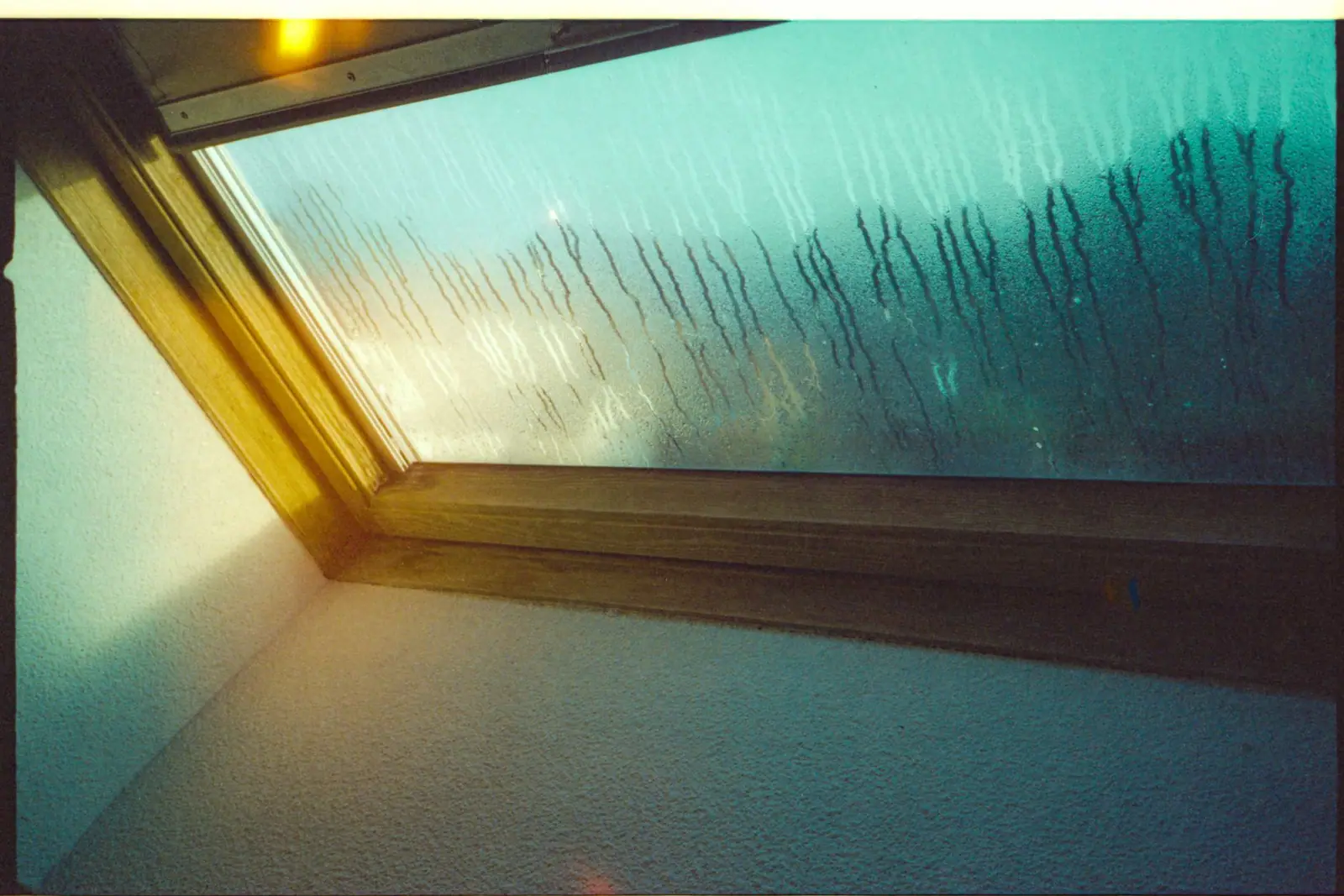
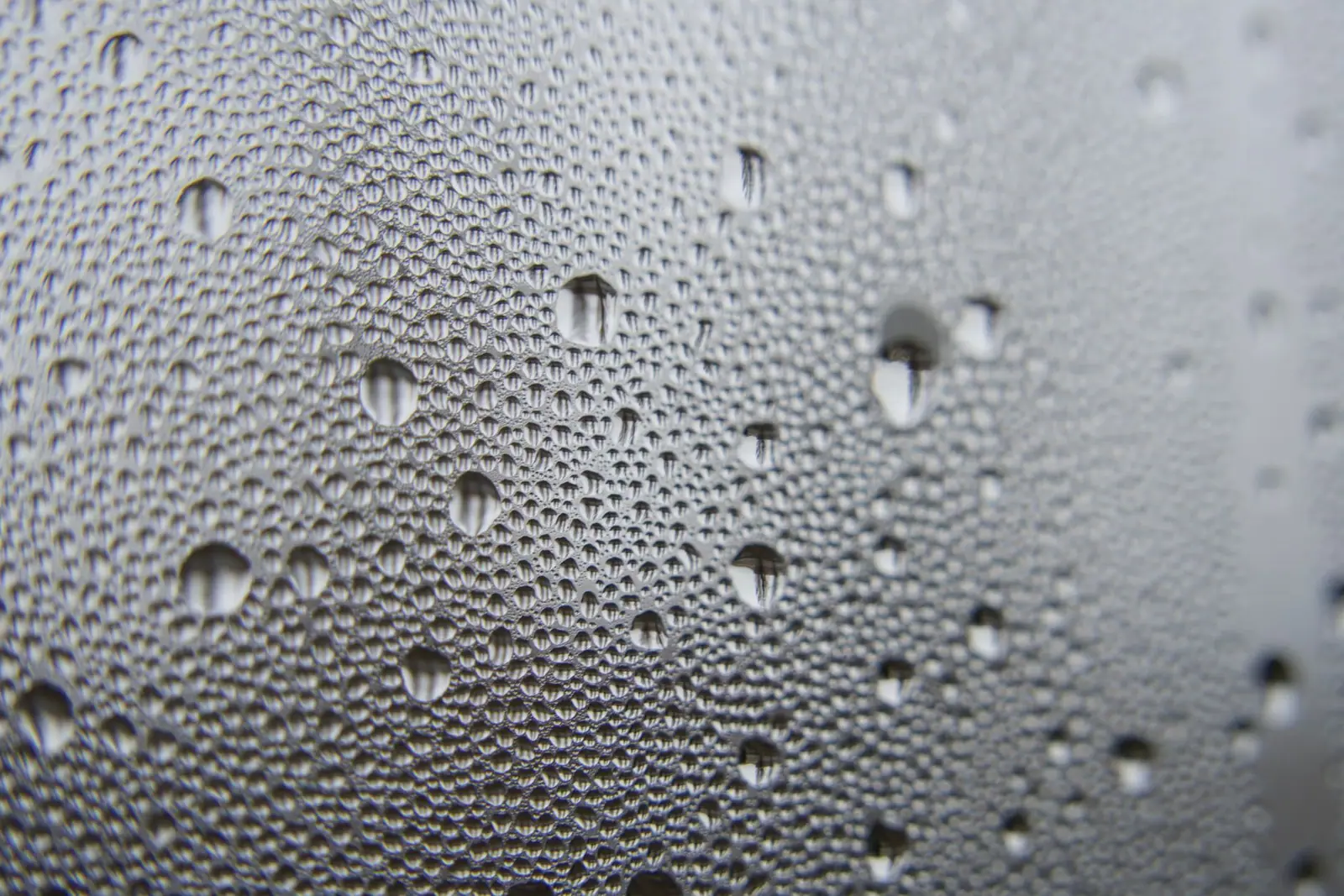
The calculations below use explicitly assumed active wattages and hours to show scale. They are not measured ratings for a particular appliance. The photographs show water on glass as context for moisture assessment; they do not prove that a particular room has excess indoor humidity or depict a dehumidifier model.
Key figures
- $8.79 Example: monthly 400-watt unit, four hours daily
- $17.58 Example: monthly 400-watt unit, eight hours daily
- $26.37 Example: monthly 400-watt unit, twelve hours daily
Eight active hours can cost twice as much as four
| Assumed active load | Active hours/day | kWh over 30 days | Cost at 18.31 cents/kWh |
|---|---|---|---|
| 400 watts | 4 | 48 | $8.79 |
| 400 watts | 8 | 96 | $17.58 |
| 400 watts | 12 | 144 | $26.37 |
| 600 watts | 8 | 144 | $26.37 |
| 600 watts | 12 | 216 | $39.55 |
Source note: energy arithmetic follows Virginia Cooperative Extension’s watts × hours ÷ 1,000 formula; the rate is EIA’s July 2026 U.S. residential average. Every wattage and runtime in this table is a worksheet assumption, not a model specification or measured household result.
- 400 watts, four hours daily$8.79
- 400 watts, eight hours daily$17.58
- 400 watts, twelve hours daily$26.37
- 600 watts, eight hours daily$26.37
- 600 watts, twelve hours daily$39.55
Source note: energy arithmetic follows Virginia Cooperative Extension's watts × hours ÷ 1,000 formula; the rate is EIA's July 2026 U.S. residential average. Every wattage and runtime in this table is a worksheet assumption, not a model specification or measured household result.
For the 400-watt, eight-hour case, 0.4 kW multiplied by eight hours gives 3.2 kWh daily. Multiplying by 30 gives 96 kWh. At a household variable rate of an assumed 30 cents instead, that same monthly energy costs $28.80. The rate can change the bill while the machine removes the same moisture under the same conditions.
Use the appliance running-cost guide to distinguish rated input from full-interval consumption. A label value multiplied by every hour plugged in can overstate a cycling machine; a calculation counting only compressor time can miss continuing fan or standby use.
A meter captures cycling and seasonal operation
A compatible electricity meter can report the total energy across operation, standby and any attached pump. Follow the meter and appliance ratings; do not connect a high-load appliance through a device that cannot handle its load. A whole-circuit reading may include other appliances and needs those separated.
Record the starting and ending kWh, elapsed hours, humidity reading, setpoint and room conditions. Include whether the tank filled and stopped operation or whether continuous drainage remained available. A low energy reading caused by a full tank is not evidence of efficient moisture removal.
For an assumed measured 21 kWh over seven representative days, the average is 3 kWh daily. A 30-day period at that pace is 90 kWh, or $16.48 at the national benchmark. Extending that week to a whole year would imply unchanged conditions, so do not make that extrapolation automatically.
Track damp-season and dry-season periods separately. The home energy budget should reflect when the appliance runs, rather than multiplying the worst summer day by every day of the year. A unit used for an assumed 120 days at 3 kWh daily uses 360 kWh, worth $65.92 at the same benchmark.
Liters per kWh measures efficiency under test conditions
ENERGY STAR’s Version 6.0 criteria took effect October 1, 2025. Its integrated energy factor, or IEF, is expressed in liters of water removed per kWh under the prescribed test and representative operating modes. A higher IEF means more moisture removal for the same test energy, not a guaranteed monthly bill.
| Portable capacity category on the criteria page | Minimum IEF under test conditions |
|---|---|
| Up to 25 pints/day | 1.70 liters/kWh |
| 25.01–50 pints/day | 2.01 liters/kWh |
Source note: ENERGY STAR Dehumidifiers Key Efficiency Criteria, checked October 2026. Capacity is a test-condition removal rate per 24 hours, not the size of the collection bucket; the table does not predict the quantity removed in a cool or dry room.
For a purely arithmetic illustration, removing ten liters at 1.70 liters/kWh would correspond to about 5.88 kWh; at 2.01 it would correspond to about 4.98 kWh. This is a comparison at stated factors, not a field prediction: the IEF test includes prescribed conditions and operating-mode assumptions that do not necessarily match a day’s bucket collection.
Choose the capacity using the manufacturer’s room and condition guidance. A larger unit may finish active work faster, while an undersized machine may fail to reach the target. Comparing watts alone ignores how much moisture each unit removes and how long it must operate.
Moisture control and water-source repair are separate costs
EPA recommends indoor relative humidity below 60%, ideally between 30% and 50%. A humidity meter provides evidence that a setpoint change is doing something in the room. Wet glass by itself cannot establish whether water came from interior condensation, rain or a leak.
The condensation and dampness guide distinguishes problems that can look similar. Water entering through a building defect requires that source addressed; continuously collecting it with an appliance does not make the defect resolved.
Indoor laundry, bathing, cooking and outdoor air entering the house can change the moisture load. The clothesline comparison treats any added moisture-control energy as part of indoor drying costs, instead of counting all avoided dryer kWh as a net saving.
Drainage and maintenance affect what the budget buys
Check whether the model drains by gravity, collects in a tank or uses a pump. Each arrangement has access and maintenance requirements. A drain hose should be installed as instructed, with a discharge destination the house can accept; avoiding manual emptying does not remove the need to inspect the system.
Cleaning filters and maintaining clear airflow are operating requirements, not optional ways to chase a lower bill. Keep the manufacturer’s clearance and temperature limits visible when comparing locations. The room that looks convenient can still be unsuitable for the appliance’s intended conditions.
Obtain qualified assessment for recurring leaks, floodwater, suspected mold or unsafe electrical conditions. A dehumidifier comparison does not specify mold treatment or make a wet electrical area safe to enter or operate equipment in.
Compare the electric charges with the task achieved: a maintained humidity level, reliable drainage and a source of moisture that is understood. The lowest kWh total is not the best result when the appliance has stopped, the bucket overflows or the room remains wet. Keep repairs and purchased equipment separate from the electricity line so neither disappears inside a monthly estimate.
Questions people ask
How much does a dehumidifier cost to run for a month?
An assumed 400-watt active load for eight hours daily uses 96 kWh over 30 days. At EIA's July 2026 national benchmark that is $17.58; measure the appliance and use the household tariff for a budget.
Should I multiply watts by every hour it is plugged in?
Cycling makes that unreliable. A compatible meter's total kWh across a representative period captures active, fan and standby consumption more directly than treating maximum input as continuous.
Does a 50-pint label describe the bucket?
Capacity in the efficiency criteria is water removed per 24 hours under specified test conditions. Bucket storage capacity is a different specification and can determine how often someone must empty it.
Will a dehumidifier solve a leaking basement?
It removes moisture from air; it does not repair water entering the structure. Identify and address the water source, and obtain qualified assessment where leaks, mold or electrical hazards are involved.
Where these figures come from
- Dehumidifiers Key Efficiency Criteria EPA ENERGY STAR · energystar.gov
- A Brief Guide to Mold, Moisture and Your Home U.S. Environmental Protection Agency · epa.gov
- Estimating Appliance and Home Electronic Energy Use Virginia Cooperative Extension · vtechworks.lib.vt.edu
- July 2026 Residential Electricity Prices U.S. Energy Information Administration · eia.gov
Figures last checked October 2026.
Calculator
What does it cost to run?
Enter the appliance and your own rate. The answer is kilowatt hours multiplied by your rate.
A rough guide: real use depends on the settings, the age of the appliance and how hard it works.