On this page
Doorways are the quiet obstacle in an adapted house. A bathroom can have every fitting right and still be unusable because a walker will not go through the door, and the problem is usually a couple of inches.
Key figures
- 32 inches ADA public-building clear doorway width, homes differ
- roughly two inches Possible extra opening with swing-clear hinges
Measure the right thing
Open the door fully and measure from the face of the door to the opposite door stop. That is the clear opening, and it is what a wheelchair, a walker or two people side by side have to pass through. It is typically about two inches less than the frame width, because the door and its stop sit in the way.
The federal standards for public buildings call for a clear width of 32 inches. Those rules do not apply to private homes, but they describe what actually works, and most interior doors in American houses, especially bathroom doors, provide less.
The cheap fixes, in order
Offset hinges, also called swing-clear hinges. They let the door swing completely out of the opening rather than resting inside it, recovering roughly two inches. They cost little, fit the existing frame, and take minutes. For many houses this alone is the answer.
Remove the door. Not always acceptable for a bathroom, often perfectly acceptable for a bedroom or a hallway. A curtain preserves privacy where needed.
Remove or slim the door stop, which can gain a further half inch.
Rehang the door to open the other way, where the swing rather than the width is the problem.
Replace with a sliding or barn-style door. No swing, no lost space, and often easier for weak hands than a hinged door with a knob.
A pocket door, which is the tidiest solution and requires opening the wall, so it belongs with other building work.
Widen the opening. The real project: framing, possibly structural work, electrical cables in the wall, plaster and trim. Worth doing when a room will be used daily with a wheelchair, and not worth it to gain an inch.
The handle is half the problem
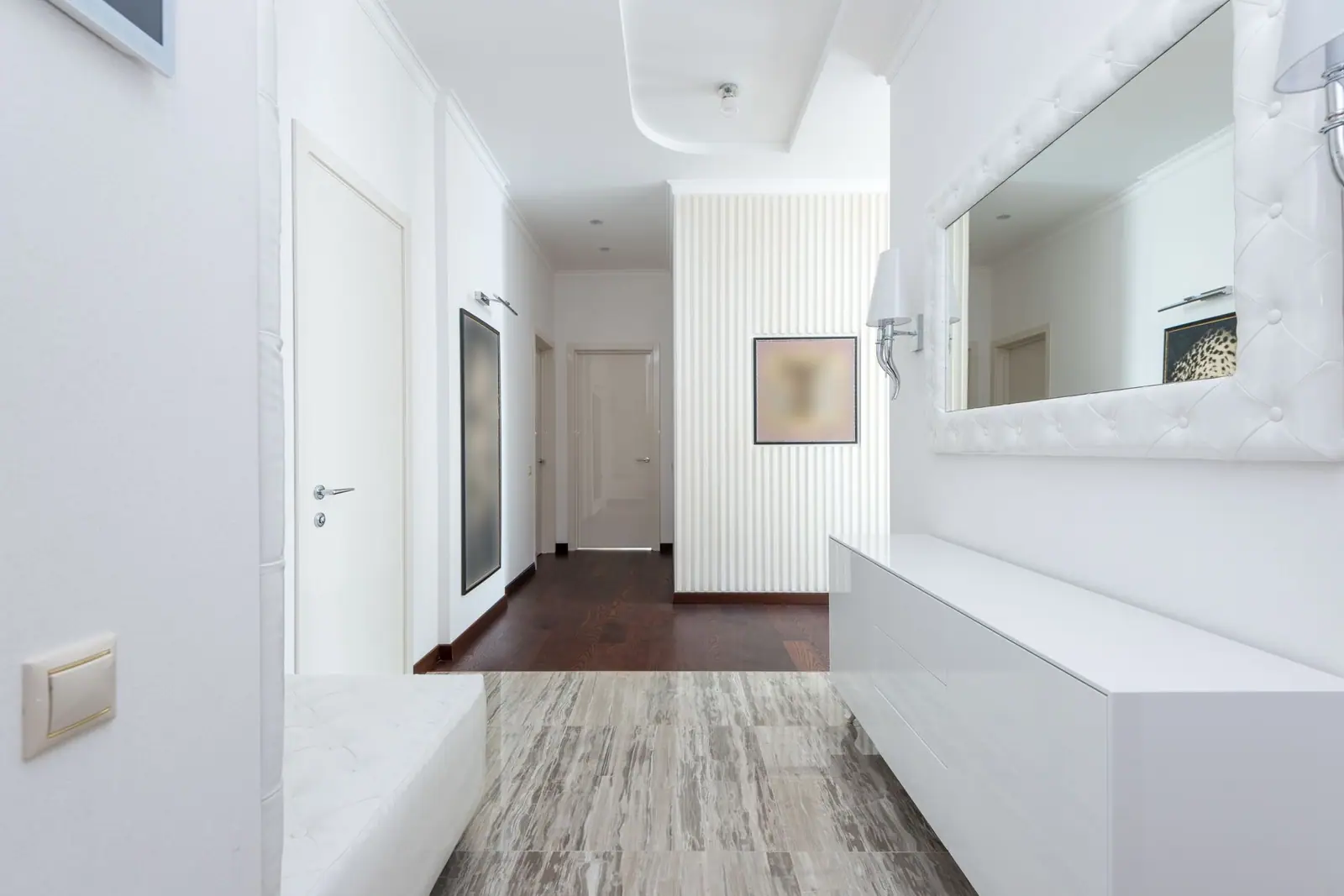
A round knob requires grip and a twisting wrist, which is exactly what arthritis takes away.
- Lever handles can be operated with a closed fist, an elbow or a forearm.
- Push plates on doors that do not need latching.
- Loop handles on sliding doors, rather than recessed finger pulls.
- Locks that can be released from outside, especially on bathroom and bedroom doors.
- Keyless entry at the front door, which removes fumbling with keys in the dark.
Lever handles are among the cheapest changes in this entire subject and among the most appreciated, because they are used dozens of times a day.
Check the thresholds at the same time. A raised sill in a doorway is a trip hazard on foot and a barrier on wheels, and most can be replaced with a low-profile or bevelled threshold for very little. Inside the house, aim for level transitions between rooms wherever the flooring changes.
The route, not just the door
A doorway is only useful if the approach works.
- Turning space on both sides. A wheelchair needs room to line up with the opening, which is often the real constraint in a narrow hallway.
- Nothing stored in the hallway, which is where the walker catches.
- Light at the door, with a switch reachable before entering the room.
- Contrast: a door frame or handle that contrasts with the wall helps anybody with poor vision find it.
- Floor coverings that do not rumple at the threshold.
What to do while walls are open
If a room is being renovated for any reason, this is when to deal with doors:
- Widen the opening if it is on the daily route.
- Frame for a pocket door if the wall allows it.
- Replace knobs with levers throughout, not only in the room being worked on.
- Bring thresholds level.
- Add a light switch at the second end of any hallway that has only one.
None of those add much to a project that is already happening, and all of them are awkward and expensive as standalone jobs.
Related reading: Accessible Door Hardware: Prices and Installation Costs and The Rug Has to Go.
Questions people ask
How wide does a doorway need to be for a wheelchair?
The benchmark used in public buildings is a 32-inch clear opening, measured with the door open from the door face to the opposite stop. Homes are not covered by those rules, but most standard interior doors provide less than that, particularly bathroom doors.
How can I widen a doorway without construction?
Fit offset or swing-clear hinges, which move the door out of the opening and recover roughly two inches for very little cost. Removing the door stop can gain a little more, and removing the door entirely or fitting a sliding door solves both width and swing.
Are lever handles better than knobs?
For most older adults, yes. A lever can be operated with a closed fist, an elbow or a forearm, while a round knob needs grip and a twisting wrist. They are inexpensive and are used dozens of times a day.
Is it worth widening a doorway permanently?
When a room will be used daily with a wheelchair, yes. It involves framing, possibly structural work, electrical cables and finishing, so it belongs with other building work rather than as a standalone job to gain an inch.
Where these figures come from
- 2010 ADA Standards for Accessible Design US Department of Justice · ada.gov
- Home Improvements and Structural Alterations (HISA) US Department of Veterans Affairs · prosthetics.va.gov
- Publication 502, Medical and Dental Expenses Internal Revenue Service · irs.gov
Figures last checked September 2026.